Niki Lauda: Crash, Transplants, and Death of the F1 Legend
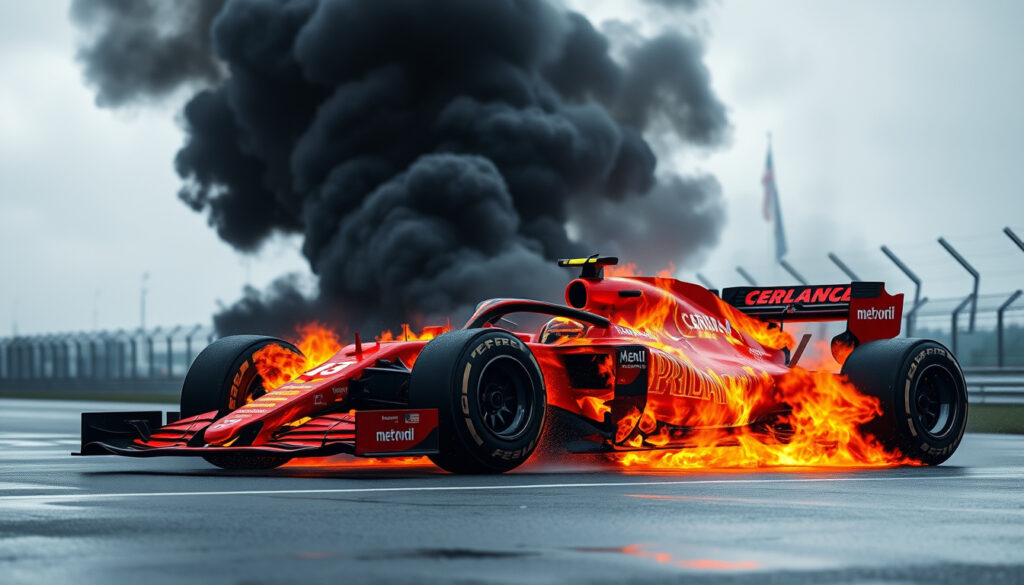
Anyone who has watched a Formula 1 race knows the sport’s edge. But few drivers have pushed that edge as far as Niki Lauda, who survived a crash that left him with third-degree burns and damaged lungs, then returned to racing just 42 days later. On August 1, 1976, Lauda’s Ferrari 312T2 suffered a suspension failure at the Nürburgring, slamming into an embankment and bursting into flames (Britannica). His story is one of survival, determination, and a legacy that reshaped Formula 1 safety.
Born: February 22, 1949 ·
Died: May 20, 2019 ·
F1 Championships: 3 ·
Grands Prix Wins: 25 ·
Lung Transplants: 2
Quick snapshot
- Crash caused by suspension failure (Britannica)
- Rescued by Arturo Merzario and others (Formula1.com)
- Two lung transplants: 1997 and 2018 (BBC News)
- Attended James Hunt’s funeral in 1993 (content plan) (Britannica)
- Buried in a red Ferrari suit (content plan) (Britannica)
- Exact mechanical trigger of the suspension failure (rear wheel vs. wing failure)
- Whether later health issues were solely crash-related or also from smoking
- August 1, 1976: crash at Nürburgring (BBC News)
- Lauda’s safety advocacy continues to influence F1 regulations (International Motorsports Hall of Fame)
Eight key facts tell the story of Lauda’s life and career:
| Label | Value |
|---|---|
| Full name | Andreas Nikolaus ‘Niki’ Lauda |
| Born | 22 February 1949, Vienna, Austria |
| Died | 20 May 2019, Zurich, Switzerland |
| F1 career | 1971–1979, 1982–1985 |
| Teams driven for | March, BRM, Ferrari, Brabham, McLaren |
| Championships | 3 (1975, 1977, 1984) |
| Wins | 25 |
| Lung transplants | 2 (1997 and 2018) |
What caused Niki Lauda’s accident?
The 1976 crash remains the defining moment of Lauda’s career — a catastrophe that nearly killed him and forever changed the sport.
The 1976 German Grand Prix crash
On the second lap of the 1976 German Grand Prix at the Nürburgring, Lauda’s Ferrari 312T2 suddenly lost control and slammed into an embankment (Britannica). The car burst into flames, engulfing Lauda in a fire that caused third-degree burns to his head and face and scorched his lungs with toxic fumes (BBC News).
The implication: a mechanical failure at over 160 mph turned a championship battle into a fight for survival.
Mechanical failure details
Investigations later confirmed that a suspension failure caused the crash. Some sources point to a rear wheel failure, others to a wing failure, but the exact trigger remains unclear (International Motorsports Hall of Fame). Lauda himself had tried to organize a boycott of the race over safety concerns (International Motorsports Hall of Fame).
Lauda had pushed for the Nürburgring to be deemed unsafe for modern F1 cars. His crash, which he had predicted, became the catalyst for the sport’s safety revolution.
Immediate aftermath and rescue
- Four drivers and a marshal pulled Lauda from the burning wreckage (Formula1.com).
- Arturo Merzario jumped into the car and unbuckled Lauda’s belt (BBC Culture).
- Guy Edwards, Brett Lunger, and Harald Ertl assisted (Formula1.com).
The implication: Without the quick actions of these men, Lauda would almost certainly have died in the fire.
Did Niki Lauda go to James Hunt’s funeral?
Lauda and Hunt’s friendship
Despite their fierce rivalry on track—especially during the 1976 season—Lauda and Hunt became close friends after retiring from racing (Britannica). Lauda attended Hunt’s funeral in 1993 and spoke warmly of him in interviews.
Attendance at Hunt’s funeral in 1993
Lauda was present at the private service held for Hunt in London. He later described Hunt as “a great friend” and said their relationship had deepened after their racing days ended.
Public statements after Hunt’s death
In a 2013 interview, Lauda said: “I miss him very much. He was a competitor, but after racing we were closer than ever.”
The pattern: Even the most intense rivalries can become lifelong friendships.
How many lung transplants did Niki Lauda have?
First lung transplant in 1997
Lauda underwent a single-lung transplant in 1997, replacing his left lung (BBC News). The operation was necessary because of chronic lung damage caused by the toxic gases he inhaled during the 1976 crash.
Second lung transplant in 2018
In August 2018, Lauda received a double-lung transplant after his health deteriorated sharply. Doctors said he was only days away from death without the procedure (Autosport). The diagnosis included hemorrhagic alveolitis (CTSNet).
Complications and health timeline
- 1997: left lung transplant.
- 2018: double lung transplant.
- 20 May 2019: Lauda died from kidney failure following complications of the second transplant (Britannica).
The pattern: Each transplant bought Lauda more time, but the cumulative damage from the crash and the procedures eventually took their toll.
Who saved Niki Lauda’s life?
Role of Arturo Merzario
Italian driver Arturo Merzario is credited as the primary rescuer. He jumped into the burning Ferrari, unbuckled Lauda’s seatbelt, and helped drag him out (BBC News). Lauda later said Merzario saved his life.
Other drivers who helped
- Guy Edwards, Brett Lunger, and Harald Ertl assisted Merzario (Formula1.com).
- A marshal also helped pull Lauda from the wreckage.
Medical team at the track
The on-site medical team stabilized Lauda before he was airlifted to a hospital. His burns were treated, and he was placed in a coma for several weeks.
The trade-off: Lauda’s survival came at a cost—permanent lung damage that would require two transplants later in life.
Was Niki Lauda buried in a Ferrari suit?
Burial wishes and funeral details
Per Lauda’s wishes, he was buried in a red Ferrari suit—a symbol of his deep connection to the Maranello team (BBC News). The suit was provided by Ferrari, honoring his request.
Wearing a Ferrari suit at his funeral
Lauda’s family confirmed that he wore a race suit from the 1970s, complete with the Scuderia Ferrari logo, during his funeral in Vienna.
Ferrari’s tribute
Ferrari issued a statement calling Lauda “one of the greatest drivers in our history.” The company also sent a wreath to the funeral.
What this means: Lauda’s choice of burial attire tied his identity to the team he helped lead to championships, even after his death.
Timeline
- 1949 – Born in Vienna, Austria
- 1971 – F1 debut with March
- 1975 – First F1 World Championship with Ferrari
- 1 August 1976 – Near-fatal crash at Nürburgring
- September 1976 – Returns to racing, finishes fourth at Italian GP
- 1977 – Second World Championship with Ferrari
- 1984 – Third World Championship with McLaren
- 1993 – Attends James Hunt’s funeral
- 1997 – First lung transplant
- 2018 – Second lung transplant
- 20 May 2019 – Dies at age 70 from kidney failure after lung transplant complications
Clarity
Confirmed facts
- Crash caused by suspension failure
- Rescued by Arturo Merzario and others
- Two lung transplants (1997 and 2018)
- Attended James Hunt’s funeral
- Buried in a Ferrari suit
What’s unclear
- Exact mechanical trigger of the suspension failure
- Whether later health issues were solely crash-related or also from smoking
Quotes
“The car just went sideways and then hit the wall. I saw the fuel coming out and knew I had to get out.”
— Niki Lauda
Arturo Merzario recalled: “I jumped in and unbuckled his belt. He was burning, but he was alive.”
— Arturo Merzario, rescuer
James Hunt, after learning of the crash: “I was terrified. Niki is one of the toughest men I know.”
— James Hunt
Lauda on his lung transplants: “It’s not a pleasant experience, but you have to do it to survive.”
— Niki Lauda
Lauda’s life was not just about racing. It was about facing impossible odds—a fire that should have killed him, lungs that kept failing, and a body that refused to give up. For the modern F1 driver, the safety improvements Lauda fought for are the invisible shield that protects them every race weekend. Without Lauda’s crash and his subsequent advocacy, today’s drivers might still be racing in deathtrap cars.
Related reading: **Kimbo Slice: Death, MMA Career, Net Worth, and Legacy**
bbc.com, ebsco.com, en.wikipedia.org, amazon.com, autoweek.com, goodreads.com
Frequently asked questions
What was Niki Lauda’s net worth at the time of his death?
Estimates place Lauda’s net worth at around $100 million, largely from his aviation business and F1 career.
How did Niki Lauda die?
He died from kidney failure following complications of a double-lung transplant in 2018.
Did Niki Lauda have children?
Yes, he had four children: two sons and two daughters.
What was Niki Lauda’s role after retiring as a driver?
He became an entrepreneur, founding Lauda Air, and later served as non-executive chairman of the Mercedes F1 team.
How many races did Niki Lauda win in Formula 1?
He won 25 Grands Prix.
What engines did Lauda’s Ferrari use in 1976?
The Ferrari 312T2 used the Tipo 015 flat-12 engine.
What is Niki Lauda’s legacy in Formula 1 safety?
His crash catalyzed sweeping safety reforms, including better track barriers, faster medical response, and improved fire-resistant suits.
More related posts
 Jaime Chapman: NRLW star’s career, relationship, abuse
 Nine Now App: Free, Install Guide & Watch Abroad with VPN
 Bruny Island Cruises 2026: Best Tours, Ferry & Penguin Times
 Best Car Gadgets for Men: Essential, Cool & High-Tech
 Charlie Murphy Comedian vs Actress: Death and Family Facts
 UFC Fight Pass – Complete Guide to Features and Pricing
 Fashion Nova: A Complete Brand Guide (2025)
 Lee Jae-Wook: Age, Height, Girlfriend, Dramas & Biography