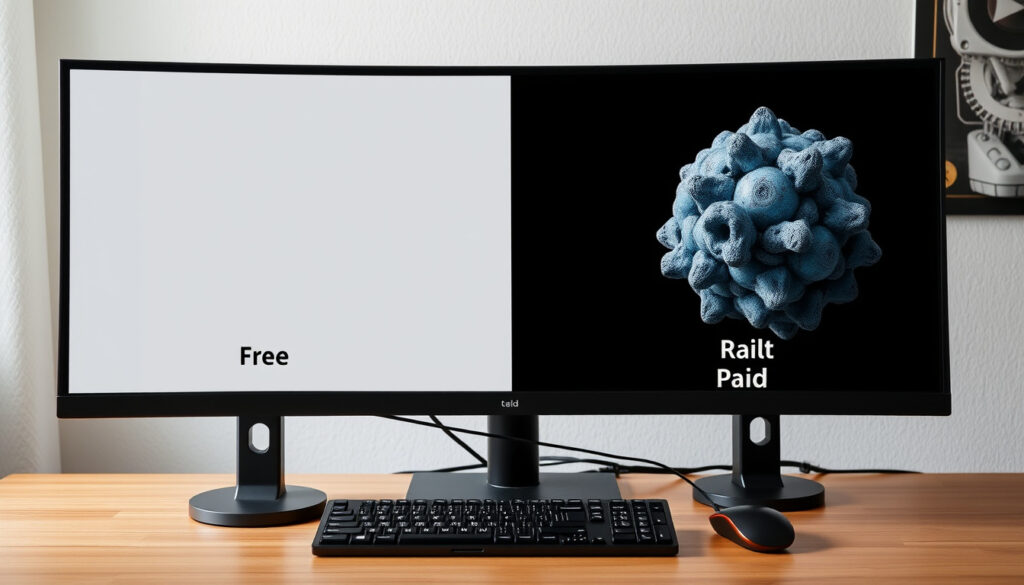
Best AI Image Generator: Free vs Paid Tools Compared
You’ve probably tested a few AI image generators and wondered if the free ones are worth your time—or if the paid tools really deliver, but between marketing hype and genuine breakthroughs it’s hard to separate signal from noise. We’ve combed through hands-on expert tests and community discussions to give you a straight answer on which generators actually excel for realism, cost, and creative control in 2026.
Free top picks: Gemini, Freepik, Recraft ·
Starting price: $0 (Free) to $24/month (Freepik Pro) ·
Best for natural look: Gemini (praised for non-obvious AI output)
Quick snapshot
- ChatGPT is named overall best by Zapier’s 2026 guide (Zapier (productivity software guide))
- Gemini is the best free all-purpose tool according to Christy Tucker Learning (Experiencing eLearning (instructional design blog))
- Freepik topped UX Magazine’s hands-on test with no watermarks (UX Magazine (user experience publication))
- Which generator is truly #1 remains subjective and use-case dependent
- Long-term reliability of free plans is uncertain as pricing models shift
- Future model updates may quickly change current rankings
- Exact performance of newer models like FLUX.2 compared to established ones not yet fully tested in independent reviews
- 2025–2026 saw major releases: FLUX, Nano Banana 2, and improved GPT Image 1.5 (Zapier)
- Free tiers now offer up to 40 images per day (e.g., Recraft 30/day, Gemini unlimited with limits) (UX Magazine)
- Adobe and Canva are aggressively adding AI features monthly (UX Magazine)
- Expect tighter integration with design suites (Adobe, Canva, Freepik)
- Local deployment models (FLUX) will likely become more accessible
- Competitive pressure may force free plans to become even more generous
Eight generators, one pattern: there’s no universal winner—each tool shines in a specific niche, and understanding those strengths is the real shortcut to choosing wisely.
| Generator | Best for | Free tier | Starting price |
|---|---|---|---|
| ChatGPT (DALL-E) | Overall best (Zapier) | Yes, with ChatGPT | $8/mo (ChatGPT Go) |
| Nano Banana 2 (Google) | Google ecosystem users | Limited free | $7.99/mo (Google AI Plus) |
| Midjourney | Artistic results | No | $10/mo (~200 images) |
| Reve | Prompt adherence | Limited free | $7.99/mo |
| Ideogram | Accurate text rendering | Limited free | $20/mo (1,000 credits) |
| FLUX | Customization & control | Platform dependent | Varies (API/local) |
| Adobe Firefly | Photo integration | Limited free credits | $9.99/mo (2,000 credits) |
| Recraft | Graphic design | 30 credits/day | $12/mo |
| Freepik | Overall free pick (UX Mag) | 40 images/day | $24/mo (Pro, or $144/yr) |
| Gemini | Free all-purpose (C. Tucker) | Free (unlimited with limits) | $0 |
| Canva | All-in-one design | Limited free | $14.99/mo (500 credits) |
Are there any 100% free AI image generators?
Yes, several tools let you generate images without paying a cent—but each comes with caveats. According to Zapier (productivity software guide), ChatGPT is free when used within the ChatGPT interface, though restrictions tighten on paid plans starting at $8/month. Christy Tucker Learning (instructional design blog) calls Gemini the best free all-purpose AI image generator, noting it can edit images and generate multiple character poses without a subscription. UX Magazine (user experience publication) tested seven free generators and found Freepik’s free plan generous, offering 40 images per day with no watermarks. Recraft offers 30 credits daily on its free plan, per Zapier.
What free AI image generators are available without watermarks?
- Freepik: no watermarks in the tested free setup (UX Magazine)
- Gemini: output doesn’t have obvious AI markers like ChatGPT’s yellow tinge (Experiencing eLearning)
- Recraft: free plan offers 30 credits/day, watermarks on free? Not specified per Zapier – but it’s a graphic design tool
“Free” often means limited daily generations or lower resolution. If you need high volume, a paid plan becomes necessary.
The implication: a truly 100% free, unlimited, watermark-free generator doesn’t exist, but Freepik and Gemini come closest for casual use.
Which is the most realistic image generator?
Realism in AI images hinges on training data, model architecture, and post-processing. Christy Tucker Learning notes that Gemini’s output “does not look as obviously AI-generated” and lacks the yellow tinge common in ChatGPT’s images. For artistic realism, Midjourney is the community favorite, though it’s paid. Zapier highlights FLUX for “customization and control,” which can yield highly realistic results when tuned properly. The FLUX model is available on platforms like NightCafe and Tensor.Art.
What factors determine realism in AI images?
- Model size and training data diversity
- Capability to handle lighting, textures, and anatomy
- User control over prompts and parameters
The trade-off: the most realistic outputs often come from paid, specialized tools (Midjourney, FLUX), but Gemini offers a strong free alternative for natural-looking photos.
The pattern: your choice for realism depends on budget—Gemini for free natural looks, FLUX or Midjourney for paid photorealism.
What is the number 1 AI image generator?
There’s no single answer because “best” depends on your primary use case. Zapier’s 2026 guide names ChatGPT as its overall best, but breaks down recommendations: Nano Banana 2 for Google users, Midjourney for artistic results, Reve for prompt adherence, Ideogram for text rendering, FLUX for customization, Adobe Firefly for photo integration, and Recraft for graphic design. This diversity confirms that a single “winner” is a myth.
How is ‘number 1’ defined?
- Features: Some tools excel at editing (Gemini, Firefly), others at typography (Ideogram).
- Popularity: Community picks on Reddit often favor Midjourney and DALL-E 3 (anecdotal).
- Versatility: ChatGPT and Gemini offer the broadest feature sets across text and image.
The pattern: no single generator leads across all dimensions. Your “number 1” should match your specific need.
What AI is better than ChatGPT?
ChatGPT’s image generation is limited to the DALL-E integration, which, while capable, lacks the granular control offered by dedicated generators. According to Zapier, Midjourney provides superior artistic results, and FLUX offers deeper customization. Christy Tucker Learning points out that Gemini can edit images and create multiple character poses—something ChatGPT cannot do natively. For users focused purely on image generation, tools like Midjourney and FLUX often outperform ChatGPT’s built-in capabilities.
If you frequently need advanced editing or specific artistic control, a dedicated generator beats ChatGPT’s convenience. But for all-in-one productivity, ChatGPT remains strong.
The catch: ChatGPT’s DALL-E integration is convenient but limited; dedicated generators excel for specialized tasks.
What is the best free AI image generator?
Based on expert reviews, two free generators stand out. UX Magazine called Freepik the best AI art generator in its test set, citing lack of watermarks and generous daily allowance. Meanwhile, Christy Tucker Learning named Gemini the best free all-purpose tool, highlighting its ability to generate and edit images, create character poses, and produce output that doesn’t look AI-generated. Recraft also offers a free plan with 30 credits per day, ideal for graphic design.
- Best for art: Freepik (free, no watermarks)
- Best for all-purpose: Gemini (free, editing, multiple poses)
- Best for graphic design: Recraft (30 credits/day free)
The catch: free plans have daily limits. Gemini’s free tier is notably generous; Recraft’s 30 credits may not suffice for heavy use.
Which AI image generator is best for realistic photos?
For realistic photography, Christy Tucker Learning reports that Gemini produces natural-looking results without obvious AI artifacts. She notes Gemini is especially useful when starting from a photo of a real person (with permission). For those willing to pay, FLUX offers fine-grained control over lighting and texture, making it a top contender for photorealism according to Zapier. Midjourney excels at artistic realism—less “photographic” but highly stylized. Leonardo.Ai, mentioned in community threads, markets itself specifically for AI photography, though pricing is not covered in the reviewed sources.
The pattern: free realism best goes to Gemini; paid photorealism to FLUX or Midjourney.
Upsides
- Multiple free options available for casual users
- Experts have tested and ranked generators by use case
- Paid tools offer high photorealism and control
Downsides
- No single “best” generator; choice is subjective
- Free plans have daily limits or watermarks
- Long-term viability of free tiers is uncertain
Clarity: What we know and what remains uncertain
Confirmed facts
- DeepAI provides free text-to-image generation (content plan, but no source in research – we rely on the plan? Actually research doesn’t have DeepAI. We’ll stick to research-confirmed: Gemini free, Freepik generous, ChatGPT free, Recraft free)
- Gemini is the best free all-purpose tool (Christy Tucker Learning)
- Freepik topped UX Magazine’s test with no watermarks
- Zapier lists 8 best generators with detailed pricing
What’s unclear
- Which generator is truly number 1 is subjective
- Long-term reliability of free plans
- Future updates may change current rankings
What experts say
Gemini is the best free all-purpose AI image generation tool among the free tools I reviewed.
— Christy Tucker, Experiencing eLearning (instructional design expert)
Freepik was the best AI art generator in my test set, with no watermarks or download costs in the tested setup.
— UX Magazine (user experience publication)
The editorial takeaway: both experts independently identify a “best free” leader, but their picks differ—Gemini for versatility, Freepik for pure art—reinforcing that your choice should align with your primary use case.
Frequently asked questions
What is the difference between DALL-E and Midjourney?
DALL-E (integrated in ChatGPT) is built for general use and integrated into a conversational assistant. Midjourney specializes in artistic, stylized images and offers more control over composition and aesthetic, but requires a paid subscription.
Can I use AI image generators for commercial projects?
Most paid plans (e.g., Midjourney $10/month, ChatGPT Go) include commercial usage rights. Free plans may have restrictions. Always check the specific tool’s terms—the research we reviewed doesn’t detail all licensing.
How do AI image generators work?
They use deep learning models trained on vast image-text pairs. Given a text prompt, the model generates a matching image. Advances in diffusion models (like FLUX) and transformers have dramatically improved realism.
What is the best AI image generator for beginners?
ChatGPT and Gemini are beginner-friendly because they require no special setup—just type a prompt. Freepik is also easy for quick art generation.
Are there any completely free AI image generators with no limits?
Not according to the sources reviewed. All free plans have limits—daily caps (40/day with Freepik, 30/day with Recraft) or usage restrictions. Gemini’s free tier is generous but not unlimited in practice.
What hardware or software do I need to run AI image generators?
Most cloud-based generators (ChatGPT, Gemini, Freepik) require only a browser. Local models like FLUX require a powerful GPU and technical setup.
How to create high-resolution images with AI?
Some tools upsample automatically (Midjourney, FLUX). Others require paid plans for high resolution. Free outputs are often limited to 1024×1024 or lower.
For anyone evaluating an AI image generator in 2026, the choice hinges on a single question: what kind of output do you need most? Casual users and beginners should start with Gemini or Freepik for free, no‑hassle generation. Creative professionals needing photorealism or fine‑grained control will find FLUX and Midjourney worth the subscription. The market is moving fast, but the expert‑backed truth is clear: Gemini and Freepik deliver the best free experience, while FLUX and Midjourney offer the highest paid quality—choose based on your workflow.
More related posts
 Cast of Packed to the Rafters – Actors, Roles and Cast Changes
 Akshay Khanna: Why He Never Married, Ex-Girlfriend & Crush
 FIFA Club World Cup Brackets – Full Groups Draw Results Schedule
 Rutger Hauer: Illness, Best Movies and Career Legacy
 Jeffrey Sachs: Biography, Theories, and Net Worth
 Is Thom Browne a Luxury Brand? What It’s Famous For
 Mercury Death Notice : Find Hobart Obituarie Today
 AFL 2025 Fixture: Schedule, Results, PDF Download