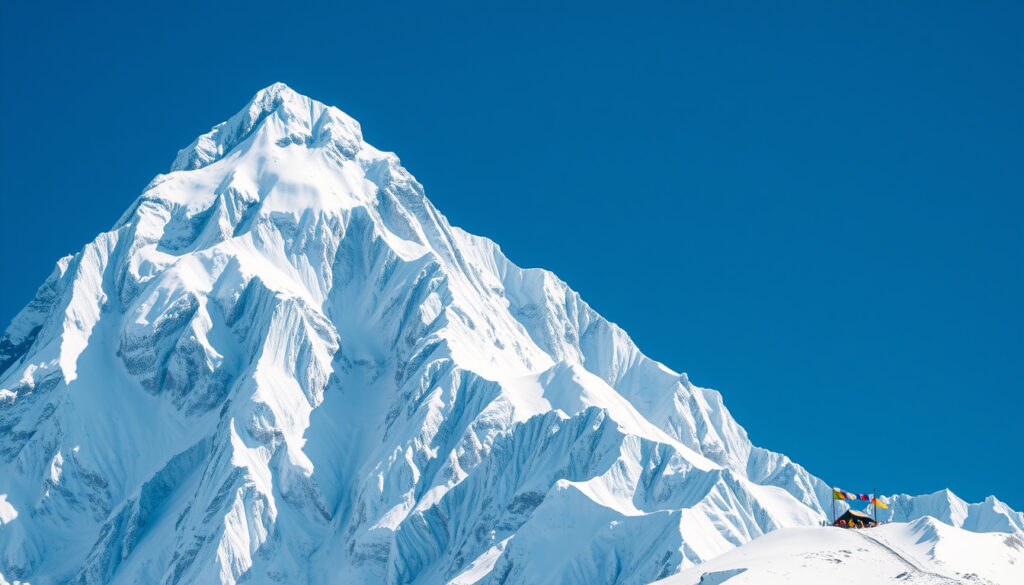
Mount Everest: Height, Cost, Deaths & First Ascent
Few mountains command the kind of global fascination that Mount Everest does. Its official height of 8,848.86 meters (29,031.7 feet) was jointly measured by Nepal and China in 2020, yet the real story lies in the economics, dangers, and human decisions that shape every attempt on the world’s highest peak. This article breaks down the key facts, costs, and safety rules that matter if you’re planning an expedition—or just curious about what it takes.
Height (meters): 8,848.86 m ·
Height (feet): 29,031.7 ft ·
First ascent: May 29, 1953 ·
Total deaths: Over 330
Quick snapshot
- Height: 8,848.86 m (29,031.7 ft) – UIAA (mountaineering and medical authority)
- First ascent: 1953 by Hillary and Norgay – Wikipedia (community-edited encyclopedia)
- Nepal permit fee: $11,000 per person – CBC News (Canadian public broadcaster)
- Total deaths: 335 as of 2024 – National Geographic (exploration and science media)
- Exact death toll varies by source – National Geographic
- Whether George Mallory and Andrew Irvine summited in 1924 – Wikipedia
- Precise number of successful summits per year (counts differ) – UIAA
- 2020 – Nepal-China joint survey sets current height – UIAA
- 2023 – Record 600+ summit permits issued – National Geographic
- 1996 – 8 climbers die in a single disaster – Wikipedia
- 2025 regulation: climbers must have summited a 7,000m peak in Nepal – Wikipedia
- Continued commercialization of guided expeditions – CBC News
Seven key measurements and milestones, one pattern: Everest’s official statistics are well-documented, but the human and regulatory landscape keeps shifting.
| Attribute | Value |
|---|---|
| Height (meters) | 8,848.86 m |
| Height (feet) | 29,031.7 ft |
| Country | Nepal & China |
| First ascent | May 29, 1953 – Edmund Hillary & Tenzing Norgay |
| Permit cost (Nepal) | $11,000 per person |
| Average expedition cost | $40,000 |
| Total deaths (approx.) | 330+ |
What is the height of Mount Everest?
Height in meters
- The official height of Mount Everest is 8,848.86 meters, measured jointly by Nepal and China in 2020 – UIAA (mountaineering and medical authority).
Height in feet
- That same measurement converts to 29,031.7 feet – UIAA.
Height in miles
- In miles, Everest stands at about 5.5 miles above sea level – National Geographic.
Height in kilometers
- 8.84886 kilometers – UIAA.
The implication: The 2020 survey resolved decades of dispute between Nepal and China, and the current height is now the globally accepted standard.
Why does it cost $40,000 to climb Mount Everest?
Permit fees
- Nepal charges a standard permit fee of $11,000 per climber – CBC News. This covers the climbing season on the South Side.
Guide and Sherpa costs
- Guided expeditions range from $35,000 to $100,000, with Sherpa support included – UIAA.
Equipment and logistics
- High-altitude gear (oxygen systems, tents, clothing, ropes) adds at least $5,000 – National Geographic.
Insurance and travel
- Emergency evacuation insurance and international flights can total $5,000–$10,000 more – CBC News.
The pattern: The permit fee is only the tip of the iceberg. The real cost driver is the complexity of logistics above 8,000 meters, where every kilogram of oxygen and gear must be carried by sherpas or porters.
How long can you stay at the peak of Everest?
Time limits due to oxygen depletion
- Climbers typically spend only 15–20 minutes at the summit – Harvard Gazette (university news outlet). Above 8,000 meters, the “death zone” makes sustained human life impossible without supplemental oxygen.
The 2pm rule
- Most guides enforce a 2pm turn-around time, regardless of proximity to the summit, to avoid descending in darkness – UIAA.
Factors affecting summit time
- Weather, crowd queues, and personal fitness can extend or shorten the summit window – BMJ/PMC (peer-reviewed medical journal).
The catch: The summit window is so tight that many climbers never actually reach the top. The 2pm rule is a life-saving discipline that forces a decision even when the goal is visible.
How many climbers have died in Everest?
Overall death toll
- By the close of the 2024 season, Everest had recorded 335 deaths since 1923 – UIAA. National Geographic estimates more than 300 based on the Himalayan Database – National Geographic.
Biggest causes of death
- Avalanches, falls, and altitude sickness are the top causes – BMJ/PMC study of mortality on Everest, 1921–2006. The study found that 85.4% of deaths on the north route occurred above 8,000 meters, compared to 43.9% on the south route.
Notable deaths
- In 1996, eight climbers died in a single disaster, including experienced guides – National Geographic. The 1996 disaster is the subject of Jon Krakauer’s “Into Thin Air.”
The trade-off: The overall death rate is about 1.2% – National Geographic. But the risk is heavily concentrated in the last 800 meters of vertical gain.
Who climbed Mount Everest first?
Edmund Hillary and Tenzing Norgay
- The first confirmed ascent was on May 29, 1953, by Edmund Hillary, a New Zealander, and Tenzing Norgay, a Sherpa from Nepal – UIAA.
The 1953 expedition
- They were part of a British expedition led by John Hunt – Wikipedia.
Confirmed ascent date
- The date is 1953-05-29 – UIAA.
Why this matters: The achievement is undisputed, but the question of earlier attempts by Mallory and Irvine (1924) remains one of mountaineering’s greatest mysteries.
Timeline
- 1920s–1930s: Early British reconnaissance and attempts – Wikipedia.
- May 29, 1953: First confirmed ascent by Hillary and Norgay – Wikipedia.
- May 10–11, 1996: The 1996 Mount Everest disaster – 8 climbers died – Wikipedia.
- 2000s: Rise of commercial expeditions – CBC News.
- 2020: Nepal-China joint survey sets current height at 8,848.86 m – UIAA.
- 2023: Record 600+ summit permits issued – National Geographic.
These milestones show the shift from early exploration to modern record-breaking.
Clarity check
Confirmed facts
- Height: 8,848.86 m (2020 measurement) – UIAA
- First ascent: 1953 by Hillary and Norgay – Wikipedia
- Nepal charges $11,000 permit fee – CBC News
What’s unclear
- Exact death toll (counts vary by source) – National Geographic
- Whether George Mallory and Andrew Irvine summited in 1924 – Wikipedia
- Precise number of successful summits each year – UIAA
- Enforcement of the 2pm rule is not officially mandated – UIAA
“It is not the mountain we conquer but ourselves.”
— Edmund Hillary, mountaineer (as quoted on Wikipedia)
“The summit was the pinnacle of my life.”
— Tenzing Norgay, Sherpa mountaineer (as quoted on Wikipedia)
Decades of data and human stories converge on a single truth: Everest is as much a test of logistics and economics as it is of physical endurance. For aspiring climbers, the choice is clear: invest in a guided expedition with a proven safety record, or risk the consequences of inexperience. For the curious reader, the mountain remains a powerful symbol of human ambition—and its limits.
en.wikipedia.org, foxnews.com, australianpolicy.org, metrobulletin.uk, amarnepal.com, anglejournal.uk
Frequently asked questions
Do you need oxygen to climb Mount Everest?
Yes, virtually all climbers use supplemental oxygen above 8,000 meters, where the “death zone” makes breathing without it nearly impossible. The Harvard Gazette explains that oxygen levels are too low for sustained human life.
How much does a climbing permit cost?
The Nepal government charges $11,000 per person for a standard South Side permit, as reported by CBC News.
Can you climb Everest without a guide?
No. Nepal requires that all climbers be accompanied by a local guide at all times, according to UIAA.
What is the best season to climb Everest?
The two main climbing seasons are pre-monsoon (April–May) and post-monsoon (September–October). The most popular window is May, when weather conditions are most stable – UIAA.
How many people have successfully climbed Everest?
By the end of 2024, there had been 12,884 summits by 7,269 different people, counting climbers and hired support – UIAA.
What is the weather like at the peak?
Temperatures at the summit can drop to -60°C (-76°F) in winter, and even in May, winds often exceed 100 km/h (62 mph) – National Geographic.
Is there a death zone on Everest?
Yes, the death zone begins above 8,000 meters (26,200 feet). Above that altitude, oxygen levels are too low for sustained human life without rapid deterioration – Harvard Gazette.
More related posts
 Deus Ex Machina – Meaning, Origin, Famous Examples
 Stan Lee: Biography, Death, Net Worth, and Legacy
 Giorgio Armani Si Perfume: Scent Notes, Seasons & Age Guide
 Ji Chang-Wook: Age, Height, Marriage, Career Facts
 Garage Storage Solutions: Shelving, Cabinets & Irish Ideas
 Sanju Samson: Biography, Net Worth, Religion, Wife, Stats, Career
 McDonald’s Virginia Under 21 Ban – Full Policy Breakdown
 Ed Kavalee: Biography, Career, and Family Life