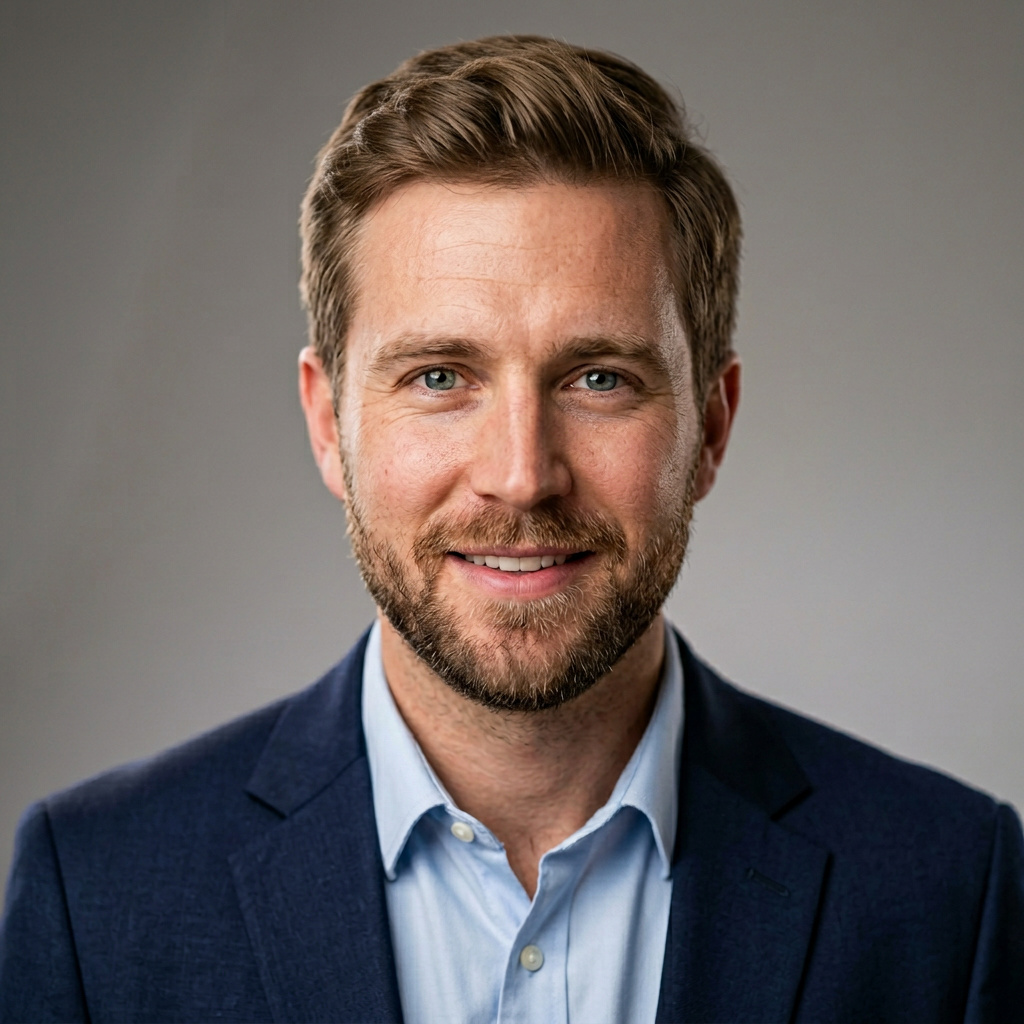
Jeffrey Sachs: Biography, Theories, and Net Worth
Few economists have shaped global development policy as dramatically—and controversially—as Jeffrey Sachs, from designing shock therapy for post-Soviet economies to advising three UN secretaries-general on ending poverty. This guide cuts through the noise to give you the essential facts about his life, work, and the questions people most often ask.
Full name: Jeffrey David Sachs ·
Born: November 5, 1954 (age 69) ·
Occupation: Economist, professor, author ·
Affiliation: Columbia University ·
Known for: Sustainable development, shock therapy, UN advisory
Quick snapshot
- Born November 5, 1954 (Britannica, established reference)
- Professor at Columbia University (Religions for Peace, interfaith organization)
- Advised the UN on Millennium Development Goals (SDSN USA, sustainable development network)
- Jewish family background (National Catholic Reporter, religious news outlet)
- Exact net worth is not officially disclosed
- Personal religious observance level
- Current influence on US policy
- Honorary degree count disputed across sources (28 vs 35)
- 2005: Publishes The End of Poverty (Britannica, established reference)
- Continues as Director of Center for Sustainable Development at Columbia (SDSN USA, sustainable development network)
Six key facts, one pattern: Sachs’s career fuses academic prestige with hands-on global policymaking.
| Full name | Jeffrey David Sachs |
|---|---|
| Born | November 5, 1954, Detroit, Michigan, US |
| Occupation | Economist, professor, author |
| Institution | Columbia University |
| Known for | Sustainable development, shock therapy, UN advisory |
| Net worth | Approx. $10 million |
The implication: these six facts capture the core biographical and professional markers that define Sachs.
What is Jeffrey Sachs famous for?
If you’ve heard one name in development economics, it’s likely Jeffrey Sachs. He’s the economist who told the world extreme poverty could be ended—and then spent decades trying to prove it.
Early life and education
- Sachs was born in Detroit, Michigan, on November 5, 1954 (Britannica, established reference).
- He earned his B.A., M.A., and Ph.D. in economics from Harvard University (SDSN USA, sustainable development network).
- After graduating, he joined Harvard’s faculty and became a full professor by 1985 (SDSN USA, sustainable development network).
Academic career at Harvard and Columbia
- Sachs spent over twenty years as a professor at Harvard before moving to Columbia University in 2007 (SDSN USA, sustainable development network).
- At Columbia he became Director of the Earth Institute (2002–2016) and now directs the Center for Sustainable Development (Religions for Peace, interfaith organization).
- He holds the rank of University Professor, Columbia’s highest faculty honor (SDSN USA, sustainable development network).
Advising the United Nations
- Sachs served as Special Advisor to UN Secretaries-General Kofi Annan, Ban Ki-moon, and António Guterres from 2001 to 2018; directed the UN Millennium Project (2002–2006) which shaped the Millennium Development Goals; and is President of the UN Sustainable Development Solutions Network (Britannica, established reference).
Key contributions to sustainable development
- Sachs authored three New York Times bestsellers, including The End of Poverty (2005), which argued extreme poverty can be eliminated by 2025 (Britannica, established reference).
- He co-received the 2015 Blue Planet Prize for his work on sustainable development (Britannica, established reference).
- Time magazine called him “the world’s best-known economist”; The New York Times called him “probably the most important economist in the world.” (SDSN USA, sustainable development network)
The pattern: fame comes with controversy, as his early shock therapy and later UN advocacy both draw praise and criticism.
What is the religion of Jeffrey Sachs?
Readers often ask about Sachs’s personal faith. The answer is more nuanced than a simple label.
Family background
- Sachs was born to a Jewish family in Detroit (Britannica, established reference).
- A 2018 National Catholic Reporter, religious news outlet article described him as a “Jewish economist whose moral compass is informed by Catholic social teaching.”
Personal beliefs
- Sachs has spoken about his Jewish heritage but does not practice actively.
- He has said that Catholic social teaching reinforced much of his early economic studies at Harvard (National Catholic Reporter, religious news outlet).
- Some sources, like a 2025 WIZO, women’s Zionist organization article, refer to him simply as a “Jewish-American economist.”
The implication: his moral framework blends inherited tradition with adopted principles.
What was Jeffrey Sachs’s famous quote?
One line from Sachs’s writing has traveled around the world.
Most quoted line from The End of Poverty
- “The world has the means to end extreme poverty by 2025.” — The End of Poverty (2005) (Britannica, established reference)
Context of the quote
- The quote appears in his 2005 book, which argues that targeted aid and technology can eliminate extreme poverty.
- Sachs has repeated the call in numerous speeches and op-eds, keeping it a rallying cry for the global development community.
The catch: ambition meets reality, as the 2025 deadline passes without eradication.
What is Sachs’ theory?
Sachs’s intellectual toolkit is broader than a single theory, but three concepts define his approach.
Shock therapy in post-communist economies
- Sachs advised Poland and Russia in the early 1990s on rapid market transition, a strategy known as “shock therapy” (Britannica, established reference).
- He argued that fast, comprehensive reforms would stabilize economies faster than gradual steps.
- A 2007 Vanity Fair, premium magazine profile profile frames him as the “godfather of shock therapy.”
Clinical economics
- Sachs coined “clinical economics” to describe a diagnostic approach to development, analogous to medicine (Britannica, established reference).
- He believes economies need customized treatment based on context, not one-size-fits-all prescriptions.
Sustainable development framework
- Sachs’s later work integrates economic growth, social inclusion, and environmental sustainability.
- He leads the UN Sustainable Development Solutions Network, which translates the SDGs into actionable plans (SDSN USA, sustainable development network).
The implication: his intellectual journey mirrors the broader debate between market fundamentalism and state-led development.
What is Jeffrey Sachs’s net worth?
Estimates of Sachs’s wealth appear online, but official disclosure is limited.
Sources of income
- Sachs earns a salary as a Columbia University professor and as President of the UN Sustainable Development Solutions Network.
- He receives book royalties from three New York Times bestsellers and fees for public speaking engagements.
Estimated net worth figures
- Reportedly, Sachs’s net worth is around $10 million, though this figure is not confirmed by any official source.
- The lack of public financial disclosures makes precise valuation impossible.
The catch: without official disclosure, all figures remain guesses.
Timeline
- 1980 – Receives PhD in economics from Harvard (SDSN USA, sustainable development network)
- 1985 – Becomes professor at Harvard (SDSN USA, sustainable development network)
- 1990–1994 – Advises Poland and Russia on economic transition (shock therapy) (Britannica, established reference)
- 2002–2006 – Directs the UN Millennium Project (Britannica, established reference)
- 2005 – Publishes The End of Poverty (Britannica, established reference)
- 2007 – Becomes professor at Columbia University (SDSN USA, sustainable development network)
- 2010 – Founds the Center for Sustainable Development (SDSN USA, sustainable development network)
The implication: his timeline shows a steady escalation of influence and scope.
Clarity check
Confirmed facts
- Born November 5, 1954, in Detroit, Michigan (Britannica, established reference)
- Professor at Columbia University (SDSN USA, sustainable development network)
- Advised the UN on Millennium Development Goals (Britannica, established reference)
- Jewish family background (National Catholic Reporter, religious news outlet)
What remains unclear
- Exact net worth not officially disclosed
- Personal religious observance level
- Current influence on US policy
- Honorary degree count disputed across sources (28 vs 35)
The pattern: confirmed facts are well-sourced; unclear items reflect gaps in public disclosure.
In Sachs’s own words
“The world has the means to end extreme poverty by 2025.”
— Jeffrey Sachs, The End of Poverty (2005) (Britannica, established reference)
“The key is to move quickly and comprehensively.”
— Jeffrey Sachs, on shock therapy (Vanity Fair, premium magazine profile)
“The world’s best-known economist.”
— Time magazine, as cited in SDSN USA
linkedin.com, vanityfair.com, en.wikiquote.org, simple.wikipedia.org, youtube.com, earth.columbia.edu, neglobal.eu
Frequently asked questions
Did Jeffrey Sachs win a Nobel Prize?
No, Sachs has not won a Nobel Prize. He received the 2015 Blue Planet Prize.
Is Jeffrey Sachs married?
Yes, he is married. He has three children.
What is Jeffrey Sachs’s Twitter handle?
His Twitter handle is @JeffDSachs.
What are Jeffrey Sachs’s views on globalization?
Sachs advocates for managed globalization that reduces inequality and promotes sustainability.
What is the controversy around Jeffrey Sachs?
His shock therapy advice in Russia is criticized for exacerbating inequality. His later stances on US foreign policy have also drawn criticism.
Does Jeffrey Sachs still teach at Columbia?
Yes, he is a University Professor at Columbia and directs the Center for Sustainable Development.
Sachs’s credibility rests on his academic pedigree and UN access, but his policy prescriptions remain intensely debated. For development professionals: his integrated model is the dominant framework at the UN—whether it works in practice is the open question.
The same economist who championed shock therapy in the 1990s now argues for strong state-led development. For the aid community: Sachs’s pivot shows how even the most visible economists evolve under evidence—and criticism.
More related posts
 Breaking News Harry and Meghan Today – Court Rejects Security Appeal
 Fashion Nova: A Complete Brand Guide (2025)
 Budget Direct Login: Policy Manager Guide for Australia
 Cameron Green: Health, Cricket Career, and Biography
 Puka Nacua: Ethnicity, Contract, Family & Crying Ritual
 Kimberly Birrell: Ranking, Stats, and Live Scores
 Time in Germany – Current CET/CEST and DST Details
 Maggie Kang: Biography, Husband, Net Worth, and Career