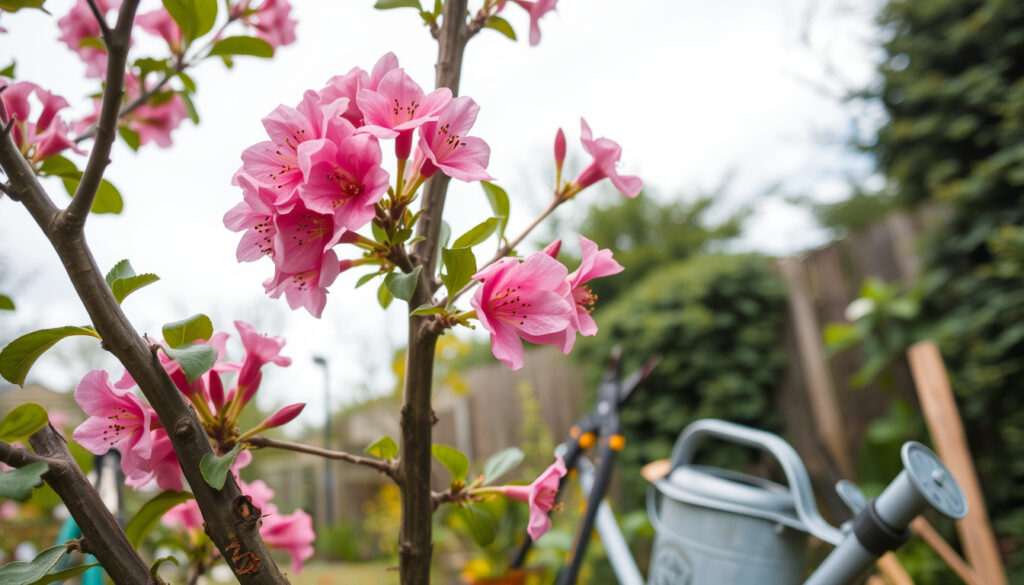
Crepe Myrtle Care: Pros, Cons & UK Growing Tips
Stop at a crepe myrtle in full flower — clouds of pink, red, or lavender that last for weeks — and you’ll understand why gardeners put up with its demands. Anyone who has tried growing one outside its comfort zone knows the relationship gets complicated. This guide walks through the real downsides, the pruning pitfalls, and what it takes to grow this temperamental beauty in marginal climates like the UK or colder US zones.
Common name: Crepe Myrtle (also Crape Myrtle) ·
Botanical name: Lagerstroemia indica ·
Native range: Indian subcontinent, Southeast Asia ·
USDA hardiness zones: 7–9 (some varieties to zone 6) ·
Typical lifespan: 20 to 50 years ·
Mature height: 3 to 25 feet (depending on cultivar)
Quick snapshot
- Crepe myrtle is deciduous in temperate climates and flowers on new wood (Clemson HGIC)
- Late-winter pruning is recommended by multiple extension services (Virginia Tech Extension)
- Powdery mildew appears in humid, shaded conditions (Royal Horticultural Society)
- UK cultivation is possible in sheltered southern gardens (Horticulture.co.uk)
- Exact lifespan in UK vs US climates — no formal long-term UK studies
- Whether all cultivars truly survive zone 6 (winter dieback risk varies by variety)
- Precise origin of ‘crepe murder’ pruning trend (anecdotal, not documented)
- Whether all crepe myrtle varieties respond the same way to UK winter conditions
- Spring (Mar–May): New growth emerges; apply balanced fertilizer
- Summer (Jun–Sep): Peak flowering; monitor for mildew and aphids
- Late autumn (Oct–Nov): Leaves drop; prune dead wood
- Winter (Dec–Feb): Dormancy; mulch for cold protection
- Breeding focus on cold-hardy and mildew-resistant cultivars for northern markets
- Growing interest in UK and Ireland for warm-summer microclimates
- Digital tools for diagnosing ‘crepe murder’ and proper pruning guides
Seven key facts, one pattern: crepe myrtle is a sun-loving, long-lived ornamental with narrow tolerances that define where it thrives.
| Attribute | Detail |
|---|---|
| Scientific name | Lagerstroemia indica (RHS Plants) |
| Plant family | Lythraceae |
| Mature height | 3–25 ft depending on cultivar (White Flower Farm) |
| Flowering season | June to September (Northern Hemisphere) |
| Hardiness zones | 7–9 (some to zone 6) (Horticulture.co.uk) |
| Soil pH preference | 5.5–7.0 (acidic to neutral) |
| Sun requirement | Full sun (minimum 6 hours direct) (Paramount Plants) |
What is the downside of crepe myrtle?
Common problems: powdery mildew, aphids, sooty mold
- Powdery mildew thrives in humid, shaded spots and can disfigure leaves and buds (Royal Horticultural Society).
- Aphids excrete honeydew that fuels sooty mold, reducing photosynthesis and flower display (UF/IFAS Extension).
- In greenhouses, glasshouse red spider mite and whitefly can also attack (RHS).
Pruning abuse and ‘crepe murder’
Heavy annual topping – often called “crepe murder” – removes the plant’s natural form and can delay blooming by weeks (RTEC Treecare). The practice is widely criticised because it weakens branch structure and creates ugly knots (Rainbow Gardens).
Messy flower and bark drop
Dead flower panicles and peeling bark create a steady litter layer beneath the tree. While the bark is ornamental in winter, the constant shed can frustrate gardeners who prefer a tidy base.
Winter dieback in colder zones
In zones 6 and below, top growth may die back to the ground during severe winters. Although roots often survive and regrow, the plant may not flower that summer (Horticulture.co.uk).
The trade-off: crepe myrtle delivers spectacular summer colour, but only when you accept its susceptibility to pests and its intolerance of shade, damp, and heavy pruning.
The same traits that make crepe myrtle a low-maintenance plant in ideal conditions – sun, warmth, good air flow – become liabilities the moment you deviate. A shaded planting or wet summer almost guarantees mildew.
Can you grow crepe myrtle in the UK?
Climate requirements for UK success
- Best suited to southern England and sheltered urban microclimates (Horticulture.co.uk).
- Needs full sun and well-drained soil – the same conditions as its native range (Paramount Plants).
- Insufficient summer warmth and sun are the main limitations for reliable flowering in Britain (Horticulture.co.uk).
Best varieties for cooler summers
Cultivars such as ‘Country Red’ and ‘Twilight’ are reportedly more tolerant of cooler conditions. The RHS lists Lagerstroemia indica ‘Twilight’ as pruning group 1 and notes it will tolerate hard pruning if needed (Royal Horticultural Society).
Overwintering protection
Mulch the root zone in late autumn and consider wrapping the trunk in frost-prone areas. Paramount Plants reports that many cultivars are hardier than expected, surviving sub-zero temperatures (Paramount Plants).
What this means: UK growers can enjoy crepe myrtle, but only in a warm, sheltered spot with full sun. Expect some winter dieback in harsh years, and don’t count on the same flower show as the US Deep South.
For British gardeners, crepe myrtle is a calculated gamble: invest in a south-facing wall and well-drained soil, and you may get a stunning August display – but accept that a cold, wet summer could leave you with a stick.
Where not to plant a crepe myrtle?
Avoid shaded or wet spots
- Shade reduces flowering and dramatically increases powdery mildew risk (Royal Horticultural Society).
- Heavy clay or waterlogged soil leads to root rot (White Flower Farm).
Near foundations or paved areas
Surface roots can lift pavers and may interfere with foundations over time. Multi-stem specimens spread wider than single-trunk forms (White Flower Farm).
Where bark peeling or flowers may be unwelcome
The constant drop of bark shreds and spent flower panicles can be a nuisance near patios, pools, or entrance paths. Also avoid planting under eaves or near downspouts where water runoff concentrates.
The pattern: crepe myrtle needs a space that mimics its native habitat – open, sunny, well-drained. Putting it in a damp corner or narrow bed almost guarantees disappointment.
Should crepe myrtle be cut back every year?
Why annual heavy pruning is discouraged
Contrary to common belief, crepe myrtle does not require annual topping. UF/IFAS Extension describes it as a low-maintenance plant needing little or no pruning if planted in full sun away from walkways (UF/IFAS Extension).
How to prune correctly (not ‘crepe murder’)
- Remove dead, diseased, crossing, and rubbing branches early in the plant’s life (Virginia Tech Extension).
- Thin out crowded branches to improve air circulation – don’t chop the crown.
- Prune in late winter or early spring before new growth emerges (Clemson HGIC).
- For smaller plants, deadheading spent blooms in mid-summer can encourage a second flush (Clemson HGIC).
When to prune for best flowering
Because crepe myrtle flowers on new wood (The Good Earth Garden), late-winter pruning is ideal. Avoid fall or early winter cutting: new growth stimulated by pruning can be damaged by cold (Monrovia).
Why this matters: the impulse to hack back a crepe myrtle every year is precisely what creates the ugly knobs and weak limbs that give the plant a bad name. Less pruning, done correctly, yields a healthier, more floriferous tree.
Why do people dislike crape myrtles?
Landscape critics: monoculture and maintenance
In parts of the US Sun Belt, crepe myrtle has been planted so heavily that it creates a uniform look. Critics argue that over-reliance on this single species reduces garden diversity.
Pest and disease frustration
- Mildew and aphid problems are common when the plant is not sited correctly (Royal Horticultural Society).
- Many gardeners assume the plant is high-maintenance because they see neighbours pruning it hard every year.
Overused in certain regions
The perception of crepe myrtle as “boring” often stems not from the plant itself, but from the widespread practice of severe pruning that destroys its natural form. Properly grown specimens rarely draw complaints.
The implication: dislike of crepe myrtle is largely a reaction to misinformed care, not to the plant’s inherent qualities. When given the right conditions and minimal, thoughtful pruning, it rewards with months of colour and striking winter bark.
Three popular crepe myrtle species, one key difference: tolerance to cold and disease varies widely.
| Species | Hardiness zones | Mildew resistance | Typical height |
|---|---|---|---|
| Lagerstroemia indica | 7–9 | Low to moderate | 10–25 ft |
| Lagerstroemia fauriei | 6–9 | High | 20–30 ft |
| Hybrid (e.g., ‘Natchez’, ‘Muskogee’) | 6–9 | High | 15–25 ft |
Seven attributes of Lagerstroemia indica, one takeaway: this is a plant that demands full sun and good drainage.
| Attribute | Value |
|---|---|
| Water needs | Moderate; drought-tolerant once established |
| Growth rate | Fast (2–3 ft per year in ideal conditions) |
| Flower colour | Pink, red, lavender, white |
| Autumn foliage | Yellow, orange, red |
| Bark texture | Smooth, mottled, peeling |
| Common uses | Specimen, street tree, container, hedge |
| Invasive potential | Low (seeds rarely germinate in cooler climates) |
Upsides
- Long summer bloom period (8–12 weeks)
- Attractive peeling bark adds winter interest
- Vibrant autumn colour
- Low water needs once established
- Dwarf cultivars suitable for containers
Downsides
- Susceptible to powdery mildew in shade/humidity
- Prone to aphids and sooty mold
- Requires full sun – no shade tolerance
- Messy flower and bark drop
- Winter dieback in zones below 7
How to prune crepe myrtle correctly (step by step)
- Wait until late winter – early spring, before buds swell (Clemson HGIC).
- Remove dead, diseased, and crossing branches first (Virginia Tech Extension).
- Thin out crowded growth to open the centre for light and air.
- Cut suckers at the base to maintain the desired form (Rainbow Gardens).
- Do not top the canopy – preserve the natural vase shape.
- For reblooming: deadhead spent flower clusters in midsummer on smaller plants (Clemson HGIC).
The principle: prune to enhance, not to reduce. A correctly pruned crepe myrtle needs only a few minutes of attention each year. For more information on knee replacement surgery, please visit Kävely polven tekonivelleikkauksen jälkeen.
What we know and what remains uncertain
Confirmed facts
- Crepe myrtle is deciduous in temperate climates (RHS).
- It flowers on new wood, so late-winter pruning encourages blooms (The Good Earth Garden).
- Powdery mildew appears under humid, shaded conditions (RHS).
- UK cultivation is feasible in sheltered southern gardens (Horticulture.co.uk).
What remains unclear
- Lifespan in UK climates lacks formal long-term studies – most data comes from US and Asian gardens.
- Actual survival rates of all cultivars in zone 6 are not systematically documented.
- The exact origin of the ‘crepe murder’ pruning trend is anecdotal.
- Whether all crepe myrtle varieties respond the same way to UK winter conditions.
The pattern: most uncertainties center on marginal climates and long-term performance — areas where formal research is thin.
Expert perspectives
“Crape myrtles are low-maintenance plants needing little or no pruning if planted in full sun away from walkways and roads.”
“Lagerstroemia indica is most suited to coastal climates in southern Britain or a sheltered garden in urban areas.”
— Horticulture.co.uk
“Pruning should be used to shape the tree rather than to severely reduce its size.”
“Many people believe heavy annual pruning is necessary – it’s not. That practice actually weakens the plant.”
The consensus: correct siting and pruning separate a thriving crepe myrtle from a frustrating one.
Crepe myrtle is neither the trouble-free no-brainer that some nurseries advertise nor the hopeless prima donna that haters describe. It demands full sun, good drainage, and a light hand with the pruners. For gardeners in the US South and warm coastal areas of the UK, the payoff is a tree that delivers three seasons of interest. But for anyone in a marginal zone or with a shady garden, the risks – mildew, aphids, winter dieback – often outweigh the rewards. For growers in Ireland and cooler UK regions, the choice is clear: invest in a protected, south-facing spot with a cold-hardy hybrid, or accept that your crepe myrtle may remain a leafy shrub that rarely flowers.
For a deeper look at common issues like mildew and pruning mistakes, see this guide on crepe myrtle downsides and UK care.
Frequently asked questions
Are crepe myrtle roots invasive?
Crepe myrtle roots are not aggressively invasive, but surface roots can lift pavers if planted too close to paths. They do not typically damage foundations.
How fast do crepe myrtles grow?
Under ideal conditions – full sun, well-drained soil, adequate water – crepe myrtles grow 2–3 feet per year. Dwarf cultivars grow more slowly.
Can you grow crepe myrtle in a pot?
Yes, dwarf cultivars (e.g., ‘Pocomoke’, ‘Chickasaw’) thrive in containers. Use a large pot with drainage holes, position in full sun, and water regularly.
When is the best time to fertilize crepe myrtle?
Apply a balanced slow-release fertilizer (e.g., 10-10-10) in early spring, just as new growth begins. Avoid fertilizing after midsummer.
What causes crepe myrtle leaves to turn yellow?
Yellowing leaves can indicate overwatering, poor drainage, or a lack of nitrogen. Powdery mildew can also cause distortion and yellow patches.
How do you stop crepe myrtle from spreading?
Crepe myrtle spreads primarily through root suckers. Remove suckers at ground level as they appear. In cooler climates, seed germination is rare.
What is the difference between single-trunk and multi-stem crepe myrtle?
Single-trunk (tree form) develops a clear leader and is often used as a specimen. Multi-stem (shrub form) grows multiple trunks from the base and works well as a screen or hedge.
Related reading: Garage Storage Solutions: Shelving, Cabinets & Irish Ideas · Dining Tables Ireland: Best Retailers & Buying Guide
More related posts
 Pauls Protein Milk: Nutrition, Health Benefits & More
 Bitcoin Price in AUD Today | BTC to Australian Dollar (2025)
 Pokémon Pack Guide: What’s Inside, Prices, and Best Expansions
 Katy Perry and Justin Trudeau Relationship Facts
 Dining Tables Ireland: Best Retailers & Buying Guide
 Bhumi Pednekar: Weight Loss, Health, and Career Facts
 Arthur Jones Dies at 39: NFL Star, Brother of Jon Jones
 Dairy Free Chocolate – Best Brands and Buying Guide