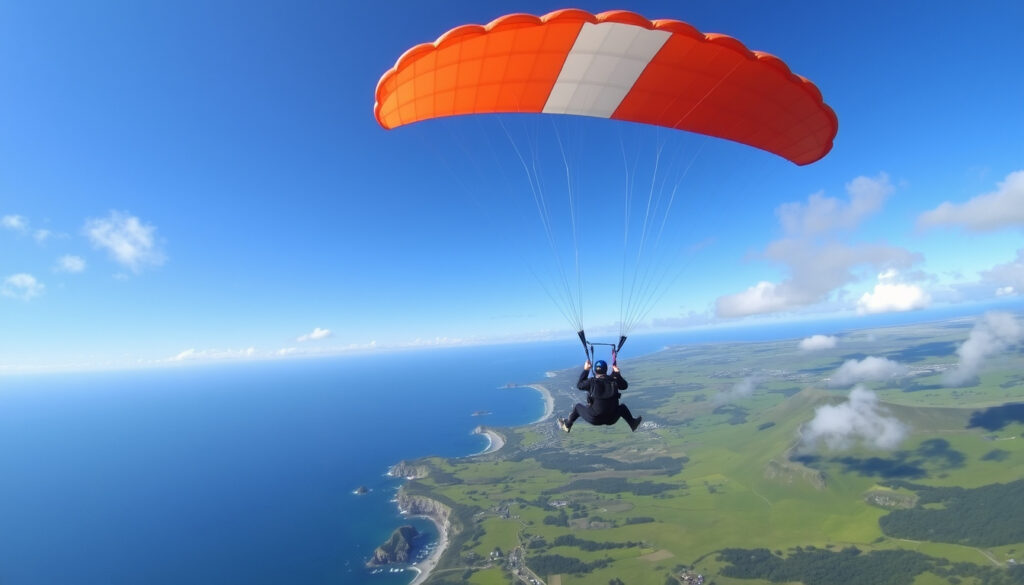
Sky Diving Ireland: Cost, Age Limits, Safety & Locations
Most people who say they’ll never jump out of a plane change their minds once they’re standing at the edge of the open door, and in Ireland, a tandem skydive costs between €200 and €300 with no upper age limit. This guide breaks down the real costs, safety numbers, and eligibility rules so you can decide if skydiving is for you.
Tandem skydive cost (Ireland): €200–€300 · Minimum age (tandem): 16 · Maximum weight: 95 kg · No upper age limit · Drop zones: 6+
Quick snapshot
- Tandem skydive cost in Ireland is €200–€300 (Skydive Ireland (largest Irish operator))
- Multiple skydiving centers operate in Ireland (AirNav Ireland (official aviation authority))
- No upper age limit for tandem jumps (Skydive Ireland (tandem page))
- Exact cost without prior booking discounts varies by drop zone
- Specific medical waiver policies differ between operators
- Weight limits may vary by operator (e.g., 95 kg standard, 115 kg at SkyDiveThru)
- Parachuting areas operate daily during daylight hours (AirNav Ireland eAIP)
- Check with your chosen drop zone for booking, availability, and weather conditions
The table below summarizes key skydiving rules from Irish operators.
| Fact | Value |
|---|---|
| Tandem cost range | €200–€300 (Skydive Ireland) |
| Minimum age (tandem) | 16 (Skydive Ireland FAQ) |
| Maximum age | No legal upper limit (Skydive Ireland Tandem page) |
| Maximum weight (standard) | 95 kg / 15 st (Skydive Ireland Terms) |
| Weight limit (under 5’4″) | 82 kg / 13 st (Skydive Ireland Terms) |
| Parental consent required | Under 18 (Skydive Ireland FAQ) |
How much does skydiving cost in Ireland?
For a first-time tandem skydive in Ireland, expect to pay between €200 and €300, depending on altitude and whether you add a media package. Skydive Ireland (the country’s largest operator) lists a basic 7,000 ft jump at £299 (about €345) and an ultimate 15,000 ft jump at £349 (€400), plus a £150 media package. Other operators like Skydive Club Ireland may charge a €35 surcharge for jumpers over 210 lbs (95 kg) and above 71″ tall.
Tandem skydive pricing
- Basic 7,000 ft tandem: £299 (€345) – Skydive Ireland
- Ultimate 15,000 ft tandem: £349 (€400) – Skydive Ireland
- Media package (video + photos): £150 – Skydive Ireland
- Weight surcharge (over 95 kg and 71″+): €35 – Skydive Club Ireland
What’s included in the price
Most tandem packages include instructor, parachute equipment, and basic training. Video and photo packages are usually extra. Prices may vary by altitude and whether you book through a charity event (e.g., Air Ambulance NI offers charity skydives with similar rates).
Booking direct with a drop zone often saves €20–€50 compared to third-party voucher sites, but you lose the flexibility of a refundable voucher. For first-timers, the lower price usually wins.
Bottom line: Tandem skydiving in Ireland typically costs €200–€300. The real cost varies by altitude, media add-ons, and whether you need a weight surcharge. For most beginners, the basic 7,000 ft jump is plenty.
What does sky diving mean?
Skydiving is the act of jumping from an aircraft and freefalling before deploying a parachute. The two main types for beginners are tandem (strapped to an instructor) and solo (after training). Tandem is the most common entry point because it requires no prior experience.
Definition of skydiving
- Jump from an aircraft at 7,000–15,000 ft
- Freefall: 30–60 seconds
- Parachute descent: 5–7 minutes
- Landing: controlled with steering toggles
Difference between tandem and solo skydiving
- Tandem: attached to a certified instructor, no experience needed
- Solo: requires training course (AFF or static line), multiple jumps and exams
- Tandem is safer and cheaper for first-timers
What this means: For first-time jumpers in Ireland, tandem is the default choice. Solo requires a significant time and money investment (€1,000+ for training).
Is there sky diving in Ireland?
Yes – Ireland has multiple active skydiving centers. The AirNav Ireland eAIP (official aviation authority) lists parachuting areas at Clonbullogue (Co. Offaly), Donegal Airport, and Kilkenny Airport, operated by Irish Parachute Club Ltd. and Irish Skydiving Club Ltd. Other operators also serve Dublin, Cork, and Galway.
Skydiving locations in Ireland
- Clonbullogue, Co. Offaly – Irish Parachute Club (daily daylight)
- Donegal Airport – Irish Parachute Club (daily daylight)
- Kilkenny Airport – Irish Skydiving Club (daily daylight)
- Belfast – Skydive Northern Ireland (tandem and AFF)
- Dublin – club-based jumps through Skydive Ireland
- Cork, Galway – seasonal events via mobile drop zones
Indoor skydiving in Ireland
Indoor skydiving (vertical wind tunnel) is available at Skydive Ireland’s facility in Dublin? Actually, indoor skydiving is not widely available in Ireland. The only known indoor venue is closed. Outdoor skydiving remains the main option.
The pattern: Most drop zones are concentrated in the midlands and north, with limited coverage in the west and south. If you’re in Cork or Galway, expect to travel to Offaly or Kilkenny for a jump.
Bottom line: Ireland has multiple drop zones, with the most reliable being in Offaly, Donegal, and Kilkenny. Plan to travel if you’re in the west or south.
Is 40 too old to skydive?
No – 40 is not too old. In Ireland, there is no legal upper age limit for tandem skydiving. Skydive Ireland (tandem page) states their oldest jumper was in their 90s. However, Skydive Ireland’s terms restrict jumpers aged 55 and over with no previous skydiving experience to tandem jumps only. Skydive Club Ireland sets a maximum age of 65 for solo jumps but allows tandem at any age.
Age limits for tandem jumps
- Minimum age: 16 (tandem, with parental consent under 18)
- No upper age limit (tandem): Skydive Ireland, Skydive Club Ireland (65 solo), Air Ambulance NI
- Over 55 first-timers: restricted to tandem only (Skydive Ireland)
Medical considerations for older jumpers
- No major medical restrictions for tandem if you’re generally healthy
- Conditions like high blood pressure, heart disease, or joint issues may require a doctor’s note
- Weight limits still apply: 95 kg standard, 82 kg if under 5’4″
Why this matters: Age alone is rarely a barrier. The real gatekeepers are weight, fitness, and medical conditions – not the number of candles on your birthday cake.
How rare is dying from skydiving?
Skydiving fatalities are exceptionally rare. The fatality rate per jump is approximately 0.0004% (1 in 250,000 jumps) according to USPA data. Tandem skydiving has an even lower risk because the instructor handles the entire process. In Ireland, no recent fatalities have been reported at the major clubs.
Skydiving fatality statistics
- Fatality rate per jump: 0.0004% (1 in 250,000)
- Tandem fatality rate: lower than solo (instructor controls deployment)
- Riskiest part: landing (not the jump itself)
Comparison with other activities
- Driving a car: 1 in 107 deaths per billion miles
- Skydiving: 1 in 250,000 jumps fatal
- Scuba diving: 1 in 200,000 dives fatal
The implication: Skydiving is statistically safer than many everyday activities. The risk is real but extremely low, especially for tandem jumps.
Who should not do sky diving?
Certain medical conditions and situations make skydiving unsafe. Skydive Ireland’s Terms require participants to declare any medical conditions. SkyDiveThru (Irish operator) states no serious medical restrictions allowed.
Medical reasons not to skydive
- Heart conditions (arrhythmia, recent heart attack)
- Pregnancy
- Recent surgery (especially back, neck, or joints)
- Severe high blood pressure (uncontrolled)
- Epilepsy (seizure risk)
- Fractures or dislocations in the last 6 months
Restrictions for tandem passengers
- Weight: maximum 95 kg (15 st) standard, or 82 kg (13 st) if under 5’4″
- Age: 16+ with parental consent under 18
- Over 55 first-timers: tandem only
The catch: Even if you have a condition, many operators allow jumps with a doctor’s clearance. Always check with the specific drop zone before booking.
Always confirm policies with your chosen drop zone as they may change.
Upsides
- Thrill of a lifetime with minimal time commitment
- No upper age limit for tandem jumps
- Low fatality rate (0.0004%)
- Multiple locations across Ireland
- Professional instructors handle all technical aspects
Downsides
- Cost can exceed €400 with media package
- Weight restrictions (95 kg max) exclude some participants
- Weather-dependent – cancellations happen
- Medical conditions may require clearance
- Limited indoor options in Ireland
What experts say about skydiving in Ireland
“We’ve had jumpers in their 90s – age is just a number if you’re healthy and within the weight limits. Our instructors are trained to handle every situation.”
— Irish Parachute Club representative
“The tandem experience is designed to be safe and enjoyable. We do a thorough briefing, equipment check, and the instructor is with you every second. First-timers often say it’s the best thing they’ve ever done.”
— Skydive Ireland operator
For first-time skydivers in Ireland, the decision is clear: if you’re healthy, within weight limits, and over 16, you can jump. The real cost is €200–€300, the risk is minimal, and the experience is unforgettable. Book direct with a drop zone, get a doctor’s note if needed, and enjoy the ride.
cancerfundforchildren.com, skydive.ie, skydiveireland.com, skydivethru.ie, irishstatutebook.ie, skydiveireland.com
For a detailed breakdown of skydiving in Ireland costs and safety, see skydiving in Ireland costs and safety.
Frequently asked questions
What is the minimum age for skydiving in Ireland?
16 for tandem jumps with parental consent. Under 18s need a signed declaration witnessed by an adult (Skydive Ireland FAQ).
Do I need to book in advance for a tandem skydive?
Yes – most operators require advance booking, especially for weekends and charity events. Walk-ins are rarely accepted.
What should I wear for a skydive?
Comfortable clothing and trainers. Avoid loose items. The drop zone will provide a jumpsuit if needed.
Can I skydive if I am pregnant?
No – pregnancy is a contraindication for skydiving due to risk of sudden deceleration.
How long does the entire skydiving experience take?
Plan for 2–3 hours total: briefing, gear up, flight, jump, and landing. The freefall is 30–60 seconds.
Is skydiving safe for people with high blood pressure?
Controlled hypertension may be acceptable with a doctor’s note. Uncontrolled high blood pressure is a risk.
What happens during a tandem skydive training?
A 15–20 minute briefing covering exit, body position, freefall, parachute deployment, and landing. The instructor handles everything.
More related posts
 Spider-Man: No Way Home: Watch Now, Cast, Box Office Hit?
 Siddharth Malhotra: Biography, Wife, Exes, Age, and Movies
 Heather Graham: Age, Marriage, Movies, and Biography
 Budget Direct Login: Policy Manager Guide for Australia
 25 Euro to AUD – Current Rate and Provider Comparison
 Sophie Cunningham: WNBA Stats, Injury, and Relationship Status
 Village Cinemas Knox: Session Times, Tickets & Guide
 Best Headphones 2025: Sony WH-1000XM6 Tops Expert Picks