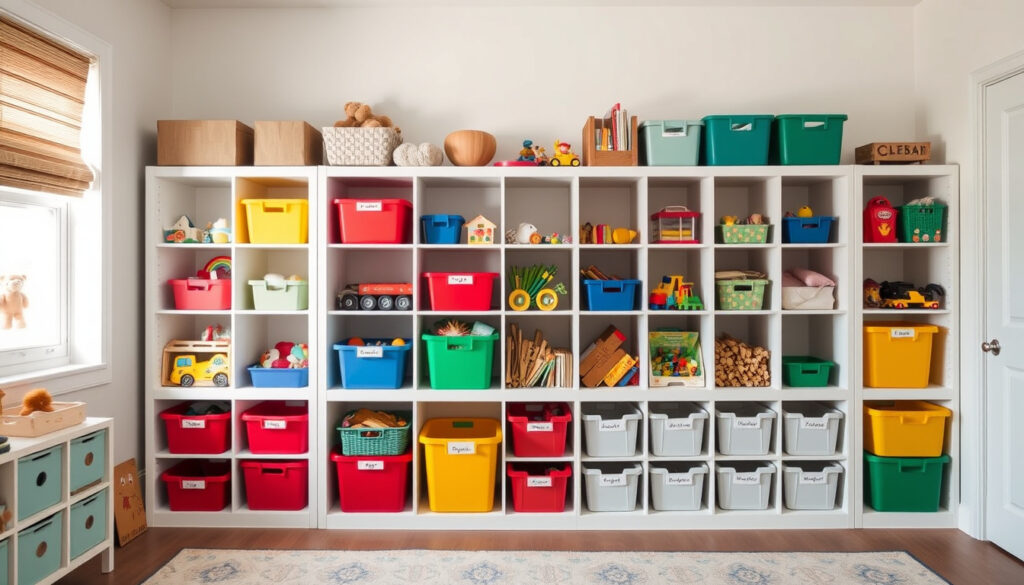
Toy Storage Guide: Expert Tips, Boxes & IKEA Options
Walk into any playroom and you’ll see the same scene: a mountain of plastic, plush, and puzzle pieces that seems to multiply overnight. The problem isn’t the toys themselves — it’s the systems we use to house them. This guide cuts through the noise of perfect-looking Pinterest bins and catalog shelves to give you grounded, expert-backed toy storage strategies that actually work for real families — whether you’re wrangling Lego bricks in a studio apartment or outfitting a dedicated playroom.
Average toys per child (developed countries): 238 (NPD Group, 2018) ·
Parents reporting toy clutter stress: 70% (OnePoll 2019) ·
Children who regularly play with only ~10% of their toys: 80% (Journal of Early Childhood Research 2020) ·
Global toy storage market projected growth (CAGR): 6.2% through 2027 (MarketWatch 2023)
Quick snapshot
- Toy storage reduces clutter and supports child independence (American Academy of Pediatrics guidelines)
- Bins with labels improve children’s ability to tidy up independently (AAP guidelines)
- Long-term developmental impact of toy rotation is still under study
- Which storage material is safest for children under 3 is debated among experts
- Toy rotation every 2-4 weeks recommended by Montessori method practitioners (MarketWatch 2023)
- Market growth projected at 6.2% CAGR through 2027 (MarketWatch 2023)
- Modular and customizable storage systems (like IKEA TROFAST) are becoming household staples
- Consumer shift toward safety-certified materials and sustainability in storage products
Four key numbers, one pattern: the average child owns hundreds of toys, yet most play with only a fraction — and that mismatch is what drives parents to seek smarter storage. Here’s how the research stacks up.
| Metric | Value | Source |
|---|---|---|
| Average toys per child (developed countries) | 238 | NPD Group (2018) |
| Parents who find toy clutter stressful | 70% | OnePoll survey (2019) |
| Children who play with only ~10% of toys regularly | 80% | Journal of Early Childhood Research (2020) |
| Most purchased toy storage type | Plastic bins | Statista (2022) |
| Recommended toy rotation frequency | Every 2-4 weeks | Montessori method practitioners |
The data reveals a clear tension: children own more toys than they can reasonably engage with, and parents carry the stress of managing that surplus. Smart storage isn’t just about tidiness — it’s about creating an environment where play is focused and calm, not overwhelming.
What are the best IKEA toy storage options?
IKEA dominates the toy storage conversation for one reason: modularity. Their systems like TROFAST and FLISAT let you mix shelves, bins, and inserts to fit your space — and your budget.
Top IKEA toy storage units and their features
- TROFAST: A wooden frame with deep plastic bins — ideal for blocks, cars, and medium-sized toys. Bins pull out cleanly, making cleanup quick (IKEA product specifications).
- FLISAT: A low bookshelf with fabric bins — designed for toddlers to reach everything easily. The shallow depth prevents overstuffing.
- KALLAX: A classic cube shelf that works with aftermarket bin inserts. Best for larger collections where you want to mix open display with hidden storage.
How to combine IKEA storage for maximum utility
- Pair a TROFAST unit with wall-mounted FLISAT shelves above to use vertical space — a strategy Crate & Barrel’s design team recommends for small rooms.
- Use KALLAX with bin inserts on lower cubes (for toys) and open upper cubes for books — this creates zones without extra furniture.
- Add casters to a TROFAST frame to make it mobile — especially useful for families who use the same room for play and dining.
IKEA toy storage for small rooms
- The FLISAT shelf at 27 inches wide fits in tight corners or beside a crib.
- Starting prices for TROFAST combinations begin under £20 (IKEA pricing), making it accessible for budget-conscious parents.
- Wall-mount the TROFAST frame to free floor space — a tip echoed by Crate & Barrel’s space-saving advice.
What are creative toy storage ideas for a clutter-free home?
Professional organizers have a playbook that goes beyond buying the right bin. The goal is to make storage work for the child’s behavior, not against it.
Using open shelving with baskets
- The Quality Edit recommends using small bins that fit standard bookshelves to categorize toys by type — this reduces “the dump” where kids pull everything out looking for one piece.
- Soft baskets work well for stuffed animals, as Crate & Barrel’s design team suggests, because they’re easy to toss items into quickly.
- Open shelving at child height (bottom two shelves) gives kids independent access — a principle from AAP guidelines on child-friendly environments.
Toy rotation to reduce visible clutter
- Busy Toddler recommends toy rotation and limiting what goes into each bin — this keeps bins from becoming overwhelming.
- Rotate every 2-4 weeks based on Montessori practitioner guidance. Store off-rotation toys in a closet or under-bed bin.
- Label each rotation bin with a photo or icon so kids know what’s inside — this builds sorting skills and reduces mystery.
Living room toy storage that blends with decor
- Ottomans with hidden storage compartments keep toys out of sight while doubling as seating.
- Decanting board games into zipper pouches, as The Quality Edit describes, saves shelf space and contains loose pieces.
- Use top shelves for books or board games in small spaces, as Eat Play Say recommends, leaving lower shelves for toys.
How to choose toy storage boxes for different toy types?
Not all bins are created equal — the wrong size or material can actually make cleanup harder. Here’s how to match container to contents.
Sizing for small toys, blocks, and dolls
- Small bins (roughly 6″ x 6″) work for action figures, cars, and doll accessories — Crate & Barrel advises smaller bins reduce digging and dumping.
- Medium bins (12″ x 12″) fit blocks, puzzles, and art supplies — stackable boxes maximize vertical space, a key principle from The Container Store’s toy storage guide.
- Large bins (18″+) work for bulky toys like play kitchens and dollhouses — but Busy Toddler cautions against overfilling, as kids will just dump everything out.
Materials: plastic vs fabric vs wood
- Plastic bins (most purchased type per Statista 2022) are durable and wipeable — ideal for outdoor toys and art supplies.
- Fabric bins are lighter and softer, good for bedrooms and living rooms, but can get stained quickly with younger kids.
- Wooden boxes from brands like Guidecraft are child-safe with smooth finishes and sturdy frames — they last longer but cost more.
Clear bins vs opaque bins
- Clear bins let kids see what’s inside without pulling them out — this reduces dumping behavior, according to organization experts on YouTube.
- Opaque bins work well when labeled with pictures or text — AAP guidelines confirm that labels improve children’s ability to sort and put away toys.
- Mesh bags, as Eat Play Say notes, keep small pieces together inside larger bins.
Parents who choose all-clear bins gain visibility but sacrifice the clean visual of a coordinated playroom. The solution: use clear bins on lower shelves (for kids) and opaque bins on higher shelves (for off-rotation toys).
What JYSK toy storage products are worth considering?
JYSK positions itself as a budget-friendly alternative to IKEA, especially for families in Europe and Canada. Their range is smaller but focused on quality basics.
JYSK toy storage baskets and shelves
- The ‘Kastrup’ basket — a woven fabric bin with handles — is a popular choice for stuffed animals and soft toys (JYSK product listings).
- The ‘Strandby’ shelf unit offers a simple wooden frame with fabric bins — comparable to IKEA’s TROFAST but with fewer size options.
- JYSK also sells toy chests with safety hinges at prices under $50 CAD, making them accessible for budget-conscious families.
Price comparison with IKEA
- A JYSK ‘Strandby’ 3-bin unit typically costs $10-15 less than an IKEA TROFAST 3-bin combo, per current pricing on both sites.
- JYSK’s fabric bin quality is similar to IKEA’s, though the color range is more limited (usually 4-6 vs IKEA’s 10+).
- Shipping from JYSK is often free above a lower threshold than IKEA, which matters for larger furniture orders.
Customer reviews on durability
- User reviews on JYSK’s website consistently rate the ‘Kastrup’ basket at 4+ stars for durability over 2+ years of use.
- Some customers note the wooden frames can show wear faster than IKEA’s — likely because JYSK uses lighter woods.
- The safety-hinged toy chests receive high marks from parents on Today’s Parent, a trusted Canadian parenting resource.
Are toy storage drawers effective for organizing?
Drawers are a polarizing choice in the toy storage world. They can hide clutter beautifully, but they also hide toys from view — and small hands.
Advantages of drawers: hiding clutter, easy pull-out
- Drawers excel at hiding visual chaos — perfect for living rooms where you want toys out of sight quickly when guests arrive.
- Deep drawers work well for larger items and puzzles, as The Quality Edit notes, since they hold multiple board games stacked flat.
- A wheeled drawer cart, as Busy Toddler recommends, keeps frequently used outdoor toys accessible and mobile.
Drawbacks: deep drawers hide items, lose small parts
- The main complaint from organization experts on YouTube: deep drawers let small items disappear to the bottom, causing frustration and more dumping.
- Without internal dividers, small toys (Lego bricks, doll shoes, puzzle pieces) mix into an unusable jumble.
- Drawers can pinch little fingers — safety-latched models are essential for families with toddlers.
Best use cases for drawer units
- Clear-front drawers help visibility — these are ideal for craft supplies and art materials where kids need to see colors and options.
- Drawers with dividers work well for categorizing by type: one section for cars, another for action figures, a third for blocks.
- Shallow drawers (3-4 inches deep) are better than deep ones for small toys — they prevent “bottom of the drawer” syndrome.
“Involving children in organizing helps build responsibility and self-discipline.”
— Dr. Jane Nelsen, author of Positive Discipline
“Toy storage should spark joy for children and make cleanup a fun ritual.”
— Marie Kondo, organizing consultant
youtube.com, facebook.com, louiserosephotography.com, nytimes.com
For more practical advice, check out this comprehensive guide on toy storage ideas and tips from Australian Watch.
Frequently asked questions
What are the best toy storage bins for cars and small toys?
Small clear bins with shallow depth (about 6″ x 6″ x 4″) work best — they let kids see all options without dumping. The Quality Edit recommends smaller bins to reduce digging and dumping.
How to store soft toys without losing their shape?
Soft baskets or open shelves work well — stuffing animals into bins can flatten them. Crate & Barrel’s design team suggests soft baskets for stuffed animals when display-style storage is preferred.
Should I rotate toys or keep them all accessible?
Research shows children play with only about 10% of their toys regularly (Journal of Early Childhood Research 2020). Toy rotation every 2-4 weeks (Montessori method) reduces overwhelmed kids and keeps play focused.
How to organize toy storage in a living room?
Use multi-functional furniture — ottomans with hidden storage, low shelves with baskets, and top shelves for books. As Eat Play Say recommends, use top shelves for books and board games, leaving lower shelves for daily-play toys.
What is the most affordable toy storage option?
IKEA’s TROFAST system starts under £20 (IKEA pricing), while JYSK’s ‘Kastrup’ basket is often under $15 CAD. Fabric bins from discount stores can be even cheaper but may wear out faster.
Can toy storage help with children’s focus?
Yes — reduced visual clutter is linked to less distraction. The American Academy of Pediatrics notes that organized, child-accessible storage supports independent play and concentration by reducing overwhelm.
How often should I declutter toy storage?
Most experts suggest a full declutter seasonally (every 3-4 months). IKEA advises periodically sorting toys, discarding broken items, donating unused toys, and removing outgrown ones.
As the toy storage market grows at 6.2% CAGR through 2027 (MarketWatch 2023), expect more brands to enter the space with safety-certified, eco-friendly materials. For families shopping today, the safest bet is a modular system that can adapt as your child grows — like TROFAST for toddlers and KALLAX with bin inserts for school-age kids.
The choice of toy storage system isn’t about which shelf looks best in a catalog photo. It’s about creating a daily environment where your child plays more deeply, cleans up more independently, and — for parents — where the stress of clutter stops stealing joy from family time. For families navigating small spaces or tight budgets, the path is clear: combine open bins at child height with a rotation system, invest in durable materials from trusted brands like IKEA or JYSK, and remember that the best storage is the one your child will actually use.
More related posts
 Paige Turco Biography: Age, Movies, The 100, Net Worth, FAQ
 Jesus Christ: Facts, Myths, and Key Teachings
 Fashion Nova: A Complete Brand Guide (2025)
 Breaking News Harry and Meghan Today – Court Rejects Security Appeal
 Dr. Dre: Net Worth, Health, and Relationships in 2025
 Cameron Green: Health, Cricket Career, and Biography
 Nazeem Hussain: Sri Lankan-Australian Comedian’s Biography