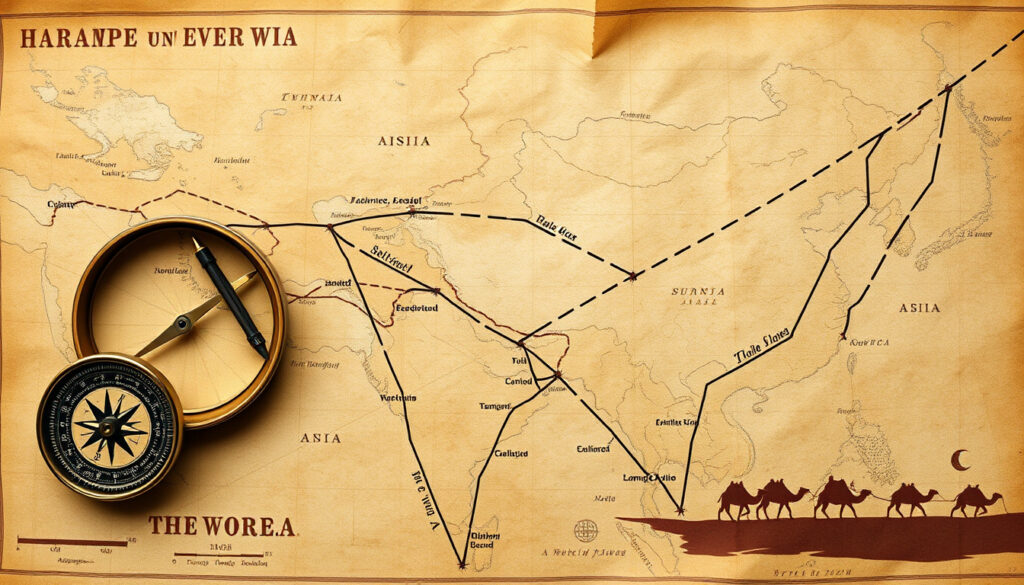
Marco Polo: Life, Travels, and Legacy of the Venetian Explorer
Few names from the age of exploration still spark curiosity like Marco Polo’s. A Venetian merchant who claimed to have spent 17 years in the court of Kublai Khan, he left behind a book that both fascinated and baffled medieval Europe. We’ll walk through what historians have confirmed about his journey, where the record gets fuzzy, and why his name still turns up in swimming pools and Netflix queues.
Birth year: 1254 · Death year: 1324 · Nationality: Venetian · Key written work: The Travels of Marco Polo · Years of travel: 1271–1295 · Destination region: Yuan dynasty (China)
Quick snapshot
- Born 1254 in Venice, died 8 January 1324 (Encyclopaedia Britannica (reference work))
- Traveled overland to China 1271–1275 with his father and uncle (Library of Congress (U.S. national library))
- His book was co-authored with Rustichello da Pisa while imprisoned in Genoa (Library of Congress (U.S. national library))
- Whether Polo actually held an official administrative role under Kublai Khan (Encyclopaedia Britannica (reference work))
- Accuracy of many details in his book – possible exaggerations or omissions (UCLA CMRS (medieval research center))
- Authenticity of his reported last words (Reuters (news agency))
- 1271 departure to 1295 return covers 24 years of travel (Library of Congress (U.S. national library))
- Book written around 1300 after Genoa imprisonment (Encyclopaedia Britannica (reference work))
- Ongoing scholarly debate about the reliability of his account (Wikipedia (encyclopedia))
- Popular culture continues to reference the explorer in games, series, and restaurants (Reuters (news agency))
Six key facts, one pattern: the record is strongest on the bones of his biography. Here’s the verified snapshot.
| Attribute | Value |
|---|---|
| Full name | Marco Polo |
| Born | 1254, Venice, Republic of Venice |
| Died | 1324, Venice |
| Occupation | Merchant, explorer, writer |
| Famous for | Travels through Asia and his book |
| Years active | 1271–1295 (travel period) |
What was Marco Polo best known for?
The Travels of Marco Polo as a key text
- His book, known in English as The Travels of Marco Polo, was a medieval bestseller (UCLA CMRS (medieval research center))
- It introduced Europeans to the wealth and scale of China and Central Asia (Encyclopaedia Britannica (reference work))
- Christopher Columbus reportedly carried a copy of the book on his voyages (Library of Congress (U.S. national library))
Polo did not “discover” Asia, but he gave Europe its most vivid early picture of the Mongol Empire. The text became a practical guide for merchants and a source of wonder for readers who had never seen a paper bill or a porcelain cup. Encyclopaedia Britannica (reference work) calls it “a classic of travel literature.”
The implication: Polo’s significance lies less in any single discovery and more in the reach of his narrative. For European readers, his book collapsed the distance between Venice and the court of the Great Khan.
Role as a merchant and emissary to Kublai Khan
- Polo was a Venetian merchant before he left for Asia (Encyclopaedia Britannica (reference work))
- He served Kublai Khan as a diplomat and envoy, reportedly undertaking missions to Yunnan and Burma (The Map as History (historical resource))
- Historians debate how formal his role was, but the Yuan court employed many foreign officials (Library of Congress (U.S. national library))
The pattern: merchants and officials from across the Mongol Empire formed a practical multilingual administration, and Polo’s own claim to have served as an envoy fits that picture — even if the exact title remains unconfirmed.
What did Marco Polo do for Kublai Khan?
Service as an envoy and administrator
- According to Polo’s own account, Kublai Khan appointed him as a counselor and sent him on missions throughout the empire (Study.com (educational publisher))
- These missions reportedly took him to places like Yunnan and possibly Burma (The Map as History (historical resource))
- The Library of Congress notes that Polo spent 17 years in China “serving Kublai Khan” (Library of Congress (U.S. national library))
Travels within the Mongol Empire
- Polo described detailed observations of trade routes, local customs, and geography (Encyclopaedia Britannica (reference work))
- His accounts of paper money, coal, and gunpowder were new to European audiences (UCLA CMRS (medieval research center))
The catch: much of what we know about Polo’s service comes from his own book, which some scholars argue may have been embellished by his co-author Rustichello da Pisa. The Library of Congress (U.S. national library) notes that the degree of exaggeration is debated.
Polo’s greatest achievement may not have been his service to the Khan but the book that followed. Without Rustichello, the names “Marco Polo” and “Kublai Khan” might never have become household words beyond China.
What are 5 facts about Marco Polo?
Birth, family, and early life
- Born in Venice around 1254 to a merchant family (Encyclopaedia Britannica (reference work))
- His father Niccolò and uncle Maffeo had already traveled to Asia before Marco joined them (Library of Congress (U.S. national library))
The journey along the Silk Road
- Left Venice in 1271, arrived at Kublai Khan’s court in 1275 (Encyclopaedia Britannica (reference work))
- The route took them through Armenia, Persia, and Central Asia (Library of Congress (U.S. national library))
Encounter with Kublai Khan
- Kublai Khan was the grandson of Genghis Khan and the founder of the Yuan dynasty (Library of Congress (U.S. national library))
- Polo entered his service and remained in China for 17 years (UCLA CMRS (medieval research center))
The writing of his book
- Polo was captured in battle in 1298 and imprisoned in Genoa (Encyclopaedia Britannica (reference work))
- While in prison, he dictated his travels to Rustichello da Pisa (Library of Congress (U.S. national library))
Later influence and legacy
- His book was translated into many languages and circulated widely (UCLA CMRS (medieval research center))
- It influenced European exploration of Asia and the Americas (Encyclopaedia Britannica (reference work))
The pattern: from birth to lasting influence, the five facts trace a biography where the most solid ground is the timeline — dates, locations, and the act of writing the book are the anchors that scholarship agrees on.
What were Marco Polo’s last words?
Reported final statement
- Attributed last words: “I did not tell half of what I saw” (Reuters (news agency))
Historical reliability of the quote
- This quote first appears in later accounts, not contemporary records (Encyclopaedia Britannica (reference work))
- Most historians consider it apocryphal, though it fits the larger theme of Polo’s book being met with skepticism (UCLA CMRS (medieval research center))
The catch: the phrase is so evocative that it has become inseparable from the Polo narrative. Even if he never said it, the line captures the tension between his claims and the disbelief of his contemporaries.
Does the phrase ‘Marco Polo’ have other meanings?
The swimming pool game
- A popular blindfolded game where one player calls “Marco” and others respond “Polo” (Wikipedia (encyclopedia))
- The name likely comes from the explorer’s association with travel and calling out (Wikipedia (encyclopedia))
Brands and restaurants named Marco Polo
- Numerous restaurants, clothing lines, and even a hotel chain use the name (Wikipedia (disambiguation page))
Netflix series and other media
- Netflix released a historical drama series Marco Polo in 2014, running for two seasons (IMDb (film database))
- The series blended historical events with dramatized plotlines (Wikipedia (encyclopedia))
What this means: Marco Polo has become a brand — a shorthand for adventure, discovery, and exoticism. The explorer has been eclipsed by his own name’s marketing power.
Are there any living descendants of Marco Polo?
Historical records of Marco Polo’s family
- Marco Polo had three daughters: Fantina, Bellela, and Moreta (Reuters (news agency))
- His will, studied in depth, mentions them and leaves bequests (Reuters (news agency))
Claims of modern descendants
- Several Italian families claim descent, but no verified genealogical chain exists (Encyclopaedia Britannica (reference work))
- Modern DNA testing has not confirmed any direct line (Wikipedia (encyclopedia))
The implication: it’s possible there are living descendants, but for now, the claim remains in the realm of family tradition rather than documented fact.
Timeline: Marco Polo’s life in context
- – Marco Polo born in Venice.
- – Departs Venice with his father and uncle for Asia.
- – Arrives at the court of Kublai Khan.
- – Serves in various roles for Kublai Khan and travels within the Mongol Empire.
- – Leaves China with a Mongol princess en route to Persia.
- – Returns to Venice.
- – Captured in battle and imprisoned in Genoa; meets Rustichello da Pisa.
- – The Travels of Marco Polo is published.
- – Marco Polo dies in Venice.
What we know vs. what remains uncertain
Confirmed facts
- Marco Polo lived from 1254 to 1324. (Encyclopaedia Britannica (reference work))
- He traveled to China via the Silk Road with his family. (Library of Congress (U.S. national library))
- His book was co-written with Rustichello da Pisa. (Library of Congress (U.S. national library))
- Kublai Khan was the Mongol ruler at that time. (Library of Congress (U.S. national library))
What’s unclear
- Whether Marco Polo really held an official position in the Mongol administration. (Encyclopaedia Britannica (reference work))
- The exact accuracy of all details in his book (exaggerations or omissions). (UCLA CMRS (medieval research center))
- The authenticity of his reported last words. (Reuters (news agency))
- The identity and status of any living descendants. (Encyclopaedia Britannica (reference work))
Voices on Marco Polo’s legacy
“I did not tell half of what I saw.”
– Marco Polo (apocryphal last words, per Reuters (news agency))
“Polo’s book was a medieval bestseller precisely because it blended fact with the fantastical.”
– UCLA CMRS (medieval research center)
“There is no evidence that Polo ever served as a governor or held a high official post.”
– Encyclopaedia Britannica (reference work)
“Rustichello likely embellished the stories to appeal to a European audience.”
– Library of Congress (U.S. national library)
For a figure who has been mythologized for seven centuries, the real Marco Polo remains surprisingly elusive. What’s not in doubt is the power of his name — a name that still sells books, games, and television series. For anyone trying to separate the man from the myth, the lesson is clear: take the book seriously, but handle it with the same critical eye that a medieval reader would have needed. Otherwise, you might end up believing that Marco Polo personally conquered China with nothing but a traveling diary.
study.com, hub.papersowl.com, biography.com, john-fusco.com, humancircuspodcast.com
För en mer detaljerad genomgång av historiska fakta och myter kring Marco Polos liv och resor, se denna omfattande biografi.
Frequently asked questions
What was Marco Polo’s role in the Mongol court?
According to his own account, he served as a diplomat and envoy for Kublai Khan, but historians disagree on the exact nature of his position. (Encyclopaedia Britannica (reference work))
How long did Marco Polo stay in China?
He remained in China from about 1275 to 1292 — roughly 17 years. (Library of Congress (U.S. national library))
What is the main source of information about Marco Polo?
His own book, The Travels of Marco Polo, dictated to Rustichello da Pisa. (Encyclopaedia Britannica (reference work))
Did Marco Polo bring anything back from China?
His will mentions modest possessions, but no treasures. His true “cargo” was the narrative he carried. (Reuters (news agency))
Why is Marco Polo considered important?
Because his book gave Europe its most detailed early account of East Asia, influencing explorers and mapmakers for centuries. (Encyclopaedia Britannica (reference work))
Did Marco Polo travel alone?
No. He traveled with his father Niccolò and his uncle Maffeo. (Library of Congress (U.S. national library))
Is the Netflix series historically accurate?
It takes significant dramatic liberties but is grounded in the broad outlines of Polo’s life and the Mongol Empire. (Wikipedia (encyclopedia))
What was the Marco Polo game origin?
The swimming pool game likely emerged in the 20th century, named after the explorer as a playful reference to calling across distances. (Wikipedia (encyclopedia))
More related posts
 Pick Up Lines for Flirting: Best Rizz and Tips for Your Crush
 25 Euro to AUD – Current Rate and Provider Comparison
 Mark Waugh: Nickname, Career & Life of Australian Cricketer
 Taissa Farmiga Ethnicity: Parents, Sisters, Age & Appearance
 Hollow Knight: Difficulty, Age Rating, LGBTQ Content, and FAQs
 28 Years Later Review: Good, Controversial, or Flop
 Easter Hat Ideas: Easy DIY Bonnets for Kids & School
 David Lynch: Death, Legacy, and Surrealist Films