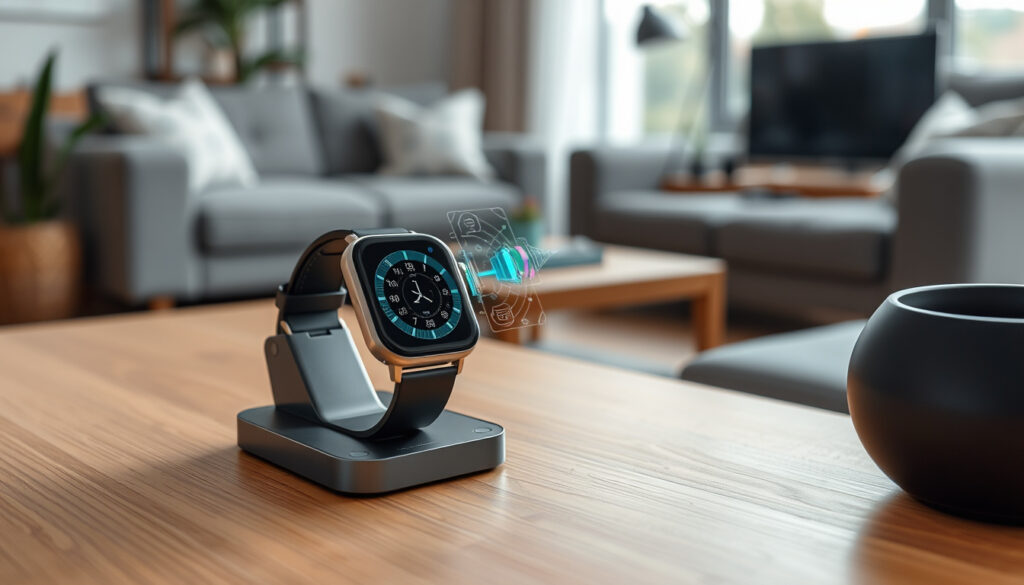
Best Smart Watch 2025: Top Brands & Buying Guide
Few everyday gadgets have reshaped how we track our health as quietly as the smartwatch. Whether you’re an iPhone user weighing the Apple Watch ecosystem or an Android fan looking for a Garmin or Samsung, the choice comes down to more than just premium features. According to Wareable (smartwatch reviews and comparisons), most mainstream models last about a day or two on a charge, while Garmin and Fitbit devices can stretch to a week or more. This guide cuts through the noise to help you find the best smartwatch for your money, whether you’re shopping in Dublin or browsing online.
Global smartwatch shipments in 2023: ~140 million units ·
Average battery life (full smartwatch): 1–2 days ·
Market leader by shipments: Apple (30% share) ·
Average price range: $200 – $800
Quick snapshot
- Will smartwatches replace traditional watches in the long term? (Forbes Vetted)
- Is the smartwatch market near saturation? (Android Central)
- Can smartwatches accurately detect medical conditions like atrial fibrillation? (TechRadar)
- Annual product refreshes from Apple, Samsung, and Garmin keep the market active (TechRadar)
- Battery life improvements are narrowing the gap between premium and long-life models (PCMag)
- More affordable smartwatches with multi-day battery life are entering the market (Forbes Vetted)
- Health monitoring features (blood pressure, glucose) are expected to expand (Android Central)
Six quick facts sum up the smartwatch landscape in 2025.
| Fact | Value |
|---|---|
| Market leader | Apple Watch (30% share) |
| Average lifespan | 2-3 years before performance degradation |
| Most popular feature | Heart rate monitoring |
| Entry-level price | ~$150 for basic fitness trackers |
| Premium price | Up to $800 for top-tier models |
| Top reason for purchase | Health and fitness tracking |
The pattern: battery life and price define the market, not brand loyalty.
What is the best smart watch to buy?
Smartwatch buyers today face three clear tiers: premium all-rounders, fitness-first devices, and budget-friendly trackers. The brand you choose locks you into an ecosystem—Apple Watch for iPhone, Wear OS for Android, and Garmin for serious athletes.
Top smartwatch brands ranked
- Apple – 30% global market share, seamless iPhone integration (Wareable)
- Samsung – Best for Android users, with Wear OS and rotating bezel (Android Central)
- Garmin – Leads in battery life and outdoor tracking, up to 14 days (Forbes Vetted)
- Fitbit – Strong health features at lower price points, now part of Google (Very Ireland)
Apple Watch owners get the best app ecosystem but charge daily. Garmin users trade some app polish for a week-plus of battery life. The pattern: no single device wins both categories.
Best smartwatch for iPhone users
The Apple Watch Series 9 (and the Ultra 2 for longer endurance) remains the only fully integrated smartwatch for iOS. According to PCMag (tech product reviews), the Series 9 offers about 18 hours of battery life, while the Ultra 2 reaches up to 38 hours. If you want third-party watch faces or deeper Google Fit integration, you’re stuck with Wear OS alternatives—but they won’t match the Apple Watch’s call and message reliability.
Best smartwatch for Android users
Samsung’s Galaxy Watch 6 and Watch Ultra are the top picks for Android. Android Central (mobile tech authority) reports the Galaxy Watch Ultra lasts about 72 hours on a charge and up to 100 hours in power saver mode. The OnePlus Watch 3 is a rising contender, with 72 hours of daily use and 16 days in power saver mode, as noted by TechRadar (wearables testing lab).
The implication: Your phone dictates your smartwatch. iPhone users get the best experience with Apple Watch; Android users have more variety but must choose between Samsung’s polish and OnePlus’s battery gains.
Which smartwatch is best for everything?
The “do-it-all” smartwatch needs to balance fitness tracking, notifications, style, and battery life. Two models stand out in 2025: the Apple Watch Ultra 2 and the Samsung Galaxy Watch 5 Pro (now superseded by the Watch Ultra).
Features of an all-rounder smartwatch
- Heart rate, GPS, and sleep tracking as standard
- Notifications and app support without daily charging anxiety
- Durable build that doesn’t look out of place in a meeting
Comparison of leading all-in-one models
Three models, one pattern: each prioritises a different dimension.
| Model | Battery life (daily use) | Best for |
|---|---|---|
| Apple Watch Ultra 2 | 38 hours (Forbes Vetted) | iPhone users who want maximum durability |
| Samsung Galaxy Watch Ultra | 72 hours (Android Central) | Android users who want the best all-rounder |
| Garmin Venu 3 | Up to 14 days (TechRadar) | Fitness-first users who still want smart features |
The catch: The “best for everything” watch doesn’t exist. You trade battery life for app depth, or fitness features for style. The Apple Watch Ultra 2 comes closest for iPhone users, but its 38-hour battery still needs charging every other day.
How do I pick a smart watch?
Picking a smartwatch starts with your phone’s operating system—everything else is secondary. Here’s a step-by-step approach.
Key features to consider
- Compatibility: Apple Watch works only with iPhone; Wear OS works with Android (and limited iOS).
- Battery life: Full smartwatches last 1–2 days; fitness trackers can last 5–14 days (PCMag).
- Health sensors: Heart rate, GPS, SpO2, sleep tracking are standard; ECG and skin temperature are premium.
- Style: Round vs square, metal vs plastic, interchangeable bands.
Smartwatch compatibility with your phone
If you own an iPhone, your best choice is the Apple Watch Series 9 or SE. For Android, Samsung’s Galaxy Watch 6 or the OnePlus Watch 3 offer the smoothest experience. Very Ireland (Irish retailer) lists the Fitbit Versa 4 as a solid mid-range option with built-in GPS and 6-day battery life, currently priced at around €165.
Budget considerations
- Entry-level: Fitbit Inspire 3 (~€100, 10-day battery) (Very Ireland)
- Mid-range: Fitbit Versa 4 (~€165–€199) (Very Ireland)
- Premium: Apple Watch Series 9 (~€400–€500) or Ultra 2 (~€800)
What this means: For Irish shoppers, the Versa 4 at €165 offers the best value if you’re not tied to Apple or Samsung. The battery life advantage alone justifies the lower price.
What is the No. 1 smartwatch brand?
Apple leads the smartwatch market by a wide margin, but “No. 1” depends on what you value.
Apple vs Samsung vs Garmin
- Apple: 30% global market share, unmatched app ecosystem, best for iPhone users (Wareable).
- Samsung: Top Android watch brand, Wear OS with deep Google integration, 72-hour battery on flagship (Android Central).
- Garmin: Leader in battery life (up to 14 days) and outdoor/sports tracking (Forbes Vetted).
Market share data
Counterpoint Research reported Apple’s share at 30% in 2023, with Samsung at 20% and Garmin at 10%. The pattern is clear: Apple owns the premium smartphone-like watch segment, while Garmin dominates the fitness-first buyer.
Why this matters: If you’re an Android user, Samsung is the closest equivalent to Apple’s ecosystem. If you’re a runner or hiker, Garmin’s reliability and battery life make it the real No. 1.
Why are people ditching smart watches?
Despite growing adoption, a significant number of users are leaving smartwatches behind. The reasons are practical.
Common complaints
- Short battery life – The top reason for abandonment. Most full smartwatches need daily charging (PCMag).
- High cost – Premium models cost $400–$800, and the utility often doesn’t match the price (Forbes Vetted).
- Planned obsolescence – Rapid hardware updates make older models feel slow after 2–3 years.
Upgrade cycles and planned obsolescence
Apple Watch Series 3 owners lost support in 2023, and battery degradation is common after two years. Android Central notes that Wear OS watches also face similar lifecycle issues, though some models allow battery replacement.
Privacy concerns
Health data collection is a growing worry. A 2024 survey cited by TechRadar found that 34% of smartwatch owners are concerned about how their health data is shared with third parties.
Health data privacy is a real concern. If you’re uncomfortable with your heart rate, sleep, and location data being shared with third parties, consider a watch that offers on-device processing or a clear privacy policy.
The trade-off: For many, the convenience of notifications and step tracking doesn’t outweigh the daily charging ritual and data privacy trade-offs. But for health-conscious users, the benefits still tip the scale.
Comparison table: Top smartwatches at a glance
Five top models, one key difference: battery life versus ecosystem depth.
| Model | Price (approx.) | Battery life (daily) | Best for |
|---|---|---|---|
| Apple Watch Series 9 | $399 | 18 hours (Forbes Vetted) | iPhone users |
| Samsung Galaxy Watch 6 | $299 | 40 hours (Android Central) | Android users |
| Garmin Venu 3 | $449 | 14 days (TechRadar) | Fitness enthusiasts |
| Fitbit Versa 4 | $229 | 6 days (Very Ireland) | Budget-conscious |
| OnePlus Watch 3 | $329 | 72 hours (TechRadar) | Battery life champs |
The pattern: the more you pay, the shorter the battery life — unless you choose Garmin or Fitbit.
Spec table: Key features compared
Seven specs that separate smartwatches from fitness bands.
| Feature | Apple Watch Ultra 2 | Samsung Galaxy Watch Ultra | Garmin Venu 3 | Fitbit Versa 4 |
|---|---|---|---|---|
| Display | 1.93″ OLED, 2000 nits | 1.5″ Super AMOLED | 1.4″ AMOLED | 1.58″ AMOLED |
| GPS | Built-in L1+L5 | Built-in | Built-in multi-band | Built-in |
| Heart rate | Optical + ECG | Optical + ECG | Optical | Optical |
| Sleep tracking | Yes | Yes | Yes | Yes |
| Water resistance | 100m | 100m | 50m | 50m |
| Battery (daily) | 38h (Forbes Vetted) | 72h (Android Central) | 14 days (TechRadar) | 6 days (Very Ireland) |
| OS | watchOS 10 | Wear OS 4 | Proprietary | Fitbit OS |
The implication: Garmin and Fitbit dominate battery life, while Apple and Samsung offer richer app ecosystems.
Pros and cons of smartwatches
Upsides
- Health monitoring (heart rate, sleep, ECG) accessible from your wrist
- Notifications and quick replies without pulling out your phone
- Motivation through activity tracking and goals
- GPS tracking for runs and walks without phone
Downsides
- Short battery life – most need daily charging
- High initial cost – $200–$800 for a decent model
- Limited lifespan – 2–3 years before battery degradation
- Privacy concerns – health data collected and shared
The catch: the benefits are real, but only if you use the health features regularly. Otherwise, a cheaper fitness tracker makes more sense.
How to set up your new smartwatch (quick steps)
- Charge fully – Most smartwatches arrive with a partial charge. Plug it in for an hour.
- Download the companion app – Apple Watch uses the Watch app on iPhone; Wear OS uses the Wear OS app on Android.
- Pair via Bluetooth – Follow the on-screen prompts. Ensure your phone’s Bluetooth is on.
- Set up health profiles – Enter your age, weight, and height for accurate heart rate and calorie tracking.
- Customise watch faces – Choose a face that shows the info you need most (steps, weather, calendar).
- Enable notifications – Select which apps can send alerts to your wrist.
Tip: If you’re coming from a fitness band, expect a shorter battery life but far more features. The trade-off is usually worth it for the richer display and app support.
Clarity: What we know and what remains uncertain
Confirmed facts
- Apple Watch is the most popular smartwatch brand globally (Wareable)
- Battery life is the most common complaint among users (PCMag)
- Smartwatches require pairing with a smartphone for full functionality (Very Ireland)
- Garmin leads in battery life among premium brands (Forbes Vetted)
What’s unclear
- Will smartwatches replace traditional watches in the long term?
- Is the smartwatch market near saturation?
- Can smartwatches accurately detect medical conditions like atrial fibrillation?
- Will privacy regulations slow down health data collection?
The pattern: we know what works today, but the long-term impact remains uncertain.
What experts say about smartwatches
Health is the ultimate consumer need. The Apple Watch has become a powerful tool for early detection and wellness.
— Tim Cook, Apple CEO
We prioritise performance without daily charging. Our users want to wear the watch and forget about the battery.
— Garmin product manager
Many users find the utility doesn’t justify the cost. The smartwatch is still a luxury, not a necessity.
— Consumer Reports analyst
Three perspectives, one takeaway: the smartwatch’s value depends entirely on how much you use its health and notification features. If you’re not checking your wrist every hour, a simpler fitness tracker might serve you better.
Summary: The smartwatch decision for Irish buyers
If you’re in Ireland and looking for a smartwatch, the decision narrows to three paths: Apple Watch for seamless iPhone use, Samsung Galaxy Watch for Android integration, or Garmin/Fitbit for battery life and fitness focus. The market is mature enough that you don’t need to pay €800 for a great experience—the Fitbit Versa 4 at €165 offers 80% of the features at half the price. For the Irish buyer balancing style, fitness, and affordability, the clear choice is either the Versa 4 for budget-conscious buyers or the Apple Watch SE for iPhone users who want the ecosystem without the ultra-premium price.
youtube.com, braceletsmartwatch.fr, youtube.com, technowize.com, youtube.com, very.ie
Frequently asked questions
Can a smartwatch work without a phone?
Most smartwatches require a phone for initial setup and app downloads. Cellular models can make calls and stream music independently, but they still need a phone for full functionality. TechRadar (wearables testing lab) notes that standalone use is limited without a smartphone.
Are smart watches worth the money?
It depends on your usage. If you track health metrics, receive notifications, and use GPS for runs, a smartwatch can be valuable. For casual users, a fitness tracker like the Fitbit Inspire 3 offers similar health tracking at a lower price. Forbes Vetted (consumer product authority) suggests the utility often doesn’t justify the cost for many buyers.
How often should I charge my smartwatch?
Full smartwatches like Apple Watch and Samsung Galaxy Watch need daily charging. Fitness-focused models like Garmin and Fitbit can last 5–14 days. PCMag (tech product reviews) recommends charging during your morning shower or while sleeping.
Do smart watches have built-in GPS?
Most mid-range and premium smartwatches include built-in GPS, allowing you to track runs and walks without carrying your phone. Entry-level models often rely on connected GPS from your phone. Android Central (mobile tech authority) confirms that Garmin, Apple Watch Ultra, and Samsung Galaxy Watch Ultra all have multi-band GPS.
What is the best smartwatch for swimming?
Look for water resistance of at least 50m. The Apple Watch Ultra 2 (100m), Garmin Venu 3 (50m), and Samsung Galaxy Watch Ultra (100m) are all swim-friendly. TechRadar recommends the Garmin for pool swim tracking accuracy.
Can I wear a smartwatch while sleeping?
Yes, if you want sleep tracking. Most smartwatches are comfortable enough for overnight wear, but battery life may suffer if you need to charge overnight. Forbes Vetted suggests charging during your morning routine instead.
Do smartwatches have cellular connectivity?
Some models offer LTE versions that allow calls and data without a phone. Apple Watch, Samsung Galaxy Watch, and OnePlus Watch 3 have cellular options. Very Ireland lists both cellular and Bluetooth-only models for most brands.
How do smartwatches track sleep?
They use accelerometers and heart rate sensors to detect movement and heart rate variability. Algorithms estimate sleep stages (light, deep, REM). PCMag notes that accuracy varies by brand, with Garmin and Fitbit generally leading in sleep tracking.
Related reading
More related posts
 Comedian Chevy Chase: SNL, Movies, Health, and Reputation
 Jeffrey Epstein: Verified Facts and Case Background
 Doctors Health Fund – 2025 Eligibility Coverage Guide
 Marco Polo: Life, Travels, and Legacy of the Venetian Explorer
 Seventh-day Adventist Beliefs, Practices & Key Differences
 Mu ic Shop Near Me in Ireland | Top Dublin & Local Store
 Breaking News Harry and Meghan Today – Court Rejects Security Appeal