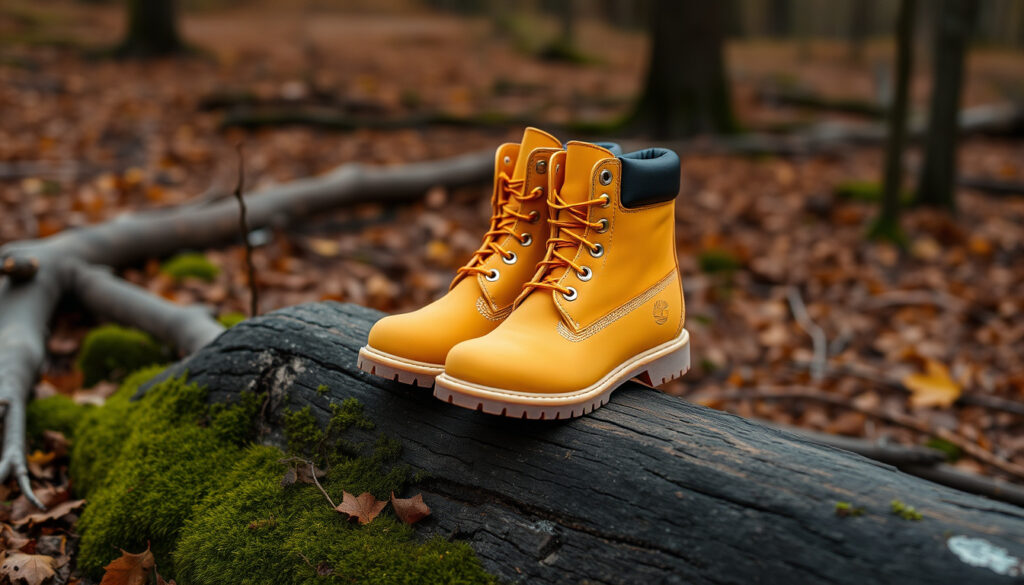
Timberland Boots: History, Features & Buying Guide
Few boots have pulled off the trick Timberland did: born as a rugged work boot for New England winters, then adopted by hip‑hop, grunge, and Irish street style alike. That yellow nubuck 6‑inch boot—first released in 1973—has become one of the most recognisable silhouettes in footwear, and this guide sorts the facts from the hype, compares Timberlands with Doc Martens, and helps you decide which pair fits your life.
Year introduced: 1973 ·
Original model: 6‑Inch Premium Boot ·
Key material: Nubuck leather with sealed seams ·
Iconic color: Yellow (Wheat) ·
Headquarters: Stratham, New Hampshire, USA
Quick snapshot
- First produced in 1973 (Finish Line Blog (footwear history))
- Original 6‑inch model in wheat colour (JD Sports Ireland)
- Made from waterproof nubuck leather with sealed seams (Heddels)
- Exact annual sales figures (proprietary data)
- Total number of boot models currently in production
- Precise split between work‑use and fashion‑use sales
- Exact year of injection‑moulding patent (claimed 1965, not independently verified)
- 1965: injection‑moulding patent filed (Finish Line Blog)
- 1973: first Timberland boot launched (JD Sports Ireland)
- 1980: international expansion into Italy (Bundlex (footwear marketplace))
- 1990s: streetwear and hip‑hop adoption explodes (Heddels)
- Continued push toward sustainable materials (Timberland Ireland)
- New collaborations with streetwear and fashion houses (Timberland Ireland)
- Regional buying guides (Ireland) for local shoppers (Timberland Ireland)
Here are the essential details about Timberland boots.
| Attribute | Detail |
|---|---|
| Brand | Timberland |
| Founded | 1973 (first boot); company renamed in 1978 (Wikipedia) |
| Headquarters | Stratham, New Hampshire, USA |
| Notable model | 6‑Inch Premium Boot in Wheat colour |
| Primary material | Waterproof nubuck leather with sealed seams |
| Original price (current US market) | ~$150–$220 (varies by model and retailer) |
What is special about Timberland boots?
Key features of Timberland boots
- Premium nubuck leather — full‑grain, oil‑finished leather that resists scuffs and weather. (Finish Line Blog)
- Seam‑sealed waterproofing — the boot is built with sealed seams and a waterproof membrane, making it suitable for wet conditions.
- Anti‑fatigue technology — a contoured footbed with a geometric honeycomb design that absorbs shock, though the brand acknowledges boots tend to run wide compared to some competitors (Timberland UK comfort guide).
- Iconic design heritage — the original 8‑inch boot was soon modified to a 6‑inch version that became the cultural standard (Heddels).
Five key specs, one pattern: Timberland prioritises durability and weather protection over lightweight flexibility.
| Spec | Detail |
|---|---|
| Upper material | Nubuck leather (waterproof) |
| Sole technology | Direct‑attach injection moulding (since 1965) |
| Waterproof rating | Yes, seam‑sealed |
| Weight (6‑inch) | Approx. 1.8 lb (816 g) per boot |
| Break‑in period | 1–3 weeks typical |
| Warranty | 1 year against manufacturing defects |
The implication: Timberland boots are built for a job, with trade‑offs in weight and stiffness that make sense for work or cold‑weather wear but less so for all‑day urban walking — until they’re broken in.
Are Timberlands or Doc Martens better?
Timberland vs Dr. Martens: Design and style
Both boots have cult followings, but they start from different design philosophies. Timberlands are heavier and sturdier, built around waterproofing and insulation. Doc Martens, in contrast, are lighter and feature air‑cushioned soles designed for all‑day comfort. Brand loyalty is fierce on both sides.
Comfort and durability comparison
Side‑by‑side, the key differences emerge quickly.
| Factor | Timberland (6‑inch Premium) | Dr. Martens (1460) |
|---|---|---|
| Weight | Heavier (~1.8 lb) | Lighter (~1.2 lb) |
| Waterproofing | Seam‑sealed (yes) | No standard waterproofing |
| Break‑in period | 1–3 weeks | 2–4 weeks (notorious) |
| Sole technology | Injection‑moulded rubber | Air‑cushioned PVC sole |
| Typical lifespan | 5–10 years with care | 3–7 years |
The trade‑off: Timberlands win on weather protection and longevity; Doc Martens win on weight and immediate comfort after break‑in. The choice depends on your climate and daily walking load.
Are Timberland boots worth the money?
Price range of Timberland boots
New Timberland 6‑inch Premium boots typically retail between $150 and $220 in the US, with slight variations in Ireland (JD Sports Ireland). The “Basic” model is often about $30 less (BootSpy).
Durability and longevity
With proper care — regular cleaning, conditioning, and occasional resoling — a pair can last 5–10 years. The resale market is strong: used yellow Timberlands in good condition routinely sell for 60–70 % of their original retail price.
Comfort and break‑in period
Timberland boots are known for a stiff break‑in. The brand’s own fitting guide recommends thicker socks and notes a 1‑ to 3‑week adjustment period (Timberland UK comfort guide). Aftermarket insoles can speed up the process.
Upsides
- Excellent waterproofing and weather resistance
- Iconic style that transcends fashion cycles
- High resale value
- Repairable (can be resoled)
Downsides
- Heavy — not ideal for all‑day walking
- Long break‑in period (1–3 weeks)
- Price point above many work‑boot alternatives
The catch: you’re paying for a boot that will hold up in wet, cold conditions for years — but only if you’re willing to put in the break‑in time.
What are the correct Timberland boots to buy?
Men’s and women’s Timberland boots
Timberland offers separate men’s and women’s lines, plus unisex styles. The classic 6‑inch Premium is available in both. For women, the fit is slightly narrower through the heel.
Classic 6‑inch vs other styles
Beyond the 6‑inch, Timberland produces chukkas (ankle‑height, lighter), Chelsea boots (sleeker, elastic side panels), and hiking‑inspired models. The choice hinges on how you’ll use them: work, casual wear, or light outdoor activity.
Color options beyond yellow
While Wheat is the signature, Timberland boots come in black, brown, navy, and seasonal shades. The yellow boot remains the cultural icon, but darker colours often look newer longer.
For Irish buyers who face rain and mud, the waterproof 6‑inch Premium in Wheat or Dark Brown is the safest bet. Those wanting a lighter step should try the Chukka or Chelsea.
Why this matters: buying the “correct” Timberland means matching the boot’s strengths (waterproofing, durability) to your local climate and daily demands — not just following the hype.
Why are Timberlands so uncomfy?
Break‑in period for Timberland boots
The stiffness comes from the thick nubuck leather and the rigid sole construction designed for longevity. Most wearers report noticeable discomfort for the first 5–15 wears.
How to make Timberlands more comfortable
- Wear thick wool or cushioned socks.
- Use a shoe tree to stretch the leather overnight.
- Apply leather conditioner to soften the upper.
- Swap the stock insole for a gel or orthotic insert (Timberland UK comfort guide recommends considering aftermarket options).
The very features that make Timberlands durable — thick leather, solid sole, sealed seams — are also what make them uncomfortable out of the box. Comfort comes only after commitment.
What to watch: if you can’t tolerate a break‑in, look at models that use softer leather or a more flexible sole, such as the Timberland Chukka.
The history of Timberland boots
First Timberland boot introduced, designed for New England winters (Finish Line Blog).
Timberland Waterproof Boot launched (Heddels).
Adopted by hip‑hop culture in New York, becomes streetwear staple (Heddels).
Brand expands globally; iconic yellow boot appears in fashion and film.
Collaborations with high‑fashion designers and streetwear brands.
Sustained popularity; new sustainable materials and styles launched (Timberland Ireland).
The pattern: Timberland boots have lived two lives — first as functional workwear, then as a cultural signifier. That duality is exactly what keeps them relevant.
Confirmed facts vs. what remains unclear
Confirmed facts
- Timberland boots were first produced in 1973.
- The original model is the 6‑inch boot in wheat colour.
- Boots are made from nubuck leather with sealed seams.
What remains unclear
- Exact annual sales figures (proprietary data).
- Number of distinct boot models currently in production.
- Precise percentage of boots sold for work vs fashion use.
- Exact year of injection‑moulding patent (claimed 1965, not independently verified).
Quotes: voices on the Timberland story
“Timberland’s early manufacturing focus was durable work footwear for workers — built to survive the New England elements.”
— Finish Line Blog (footwear history)
“The yellow nubuck colour became the most popular Timberland boot shade, especially after hip‑hop culture adopted it in the 1980s.”
— Heddels (denim and workwear culture)
These perspectives highlight the boot’s dual identity as workwear and cultural icon.
For Irish buyers, the question isn’t whether Timberlands are worth it — it’s whether the trade‑offs match your life. If you regularly face wet, cold streets and want a boot that lasts years, the investment pays off. If you prioritise weight and instant comfort, a softer style or a Doc Marten alternative may serve you better.
timberland.com, stridewise.com, footlocker.ie, timberland.com, schuh.ie
Frequently asked questions
How should Timberland boots fit?
Timberland boots generally run true to size but tend to be a bit wide. If you have narrow feet, consider sizing down half a size or adding an insole (Timberland UK comfort guide).
Are Timberland boots good for hiking?
They are not designed as technical hiking boots. The heavy weight and stiff sole make them better suited for casual walking and light trails.
Do Timberland boots run big or small?
Most wearers find they run true to size with a generous width. The brand itself notes they are wider than many competitors.
Can Timberland boots be resoled?
Yes. Many cobblers can replace the sole, extending the life of the boot significantly.
What is the best way to clean Timberland boots?
Use a nubuck cleaner or a mild soap and water. Avoid machine washing. Brush the leather gently and allow to air dry.
Are Timberland boots vegan?
Most classic Timberland boots use leather. The brand has introduced some vegan styles, but they are a small portion of the line.
Do Timberland boots come with a warranty?
Timberland offers a 1‑year warranty against manufacturing defects; normal wear and tear is not covered.
These answers cover the most common questions for potential buyers.
More related posts
 AFL 2025 Fixture: Schedule, Results, PDF Download
 Shawn Wayans: Biography, Net Worth, Family & Career
 OKC Thunder vs 76ers Match Player Stats – Box Score, Leaders & Breakdown
 TheAlite Guest Post – Guidelines and Submission Guide
 Bronny James: Cardiac Arrest, Diagnosis, and Contract
 Best Car Phone Holder: Top Picks for Safety & MOT
 Gavin Casalegno: Biography, Age, Wife and Career
 Geraldine Brooks: Books, Husband, and Pulitzer Prize Life